
 UMB Staff
On July 4, 2026, the United States commemorated the 250th anniversary of the Declaration of Independence, a milestone that invited Americans to celebrate not only the nation’s founding, but also the people and institutions that have helped define the country.
America’s story has unfolded over generations through discovery and innovation, service and sacrifice, justice and opportunity. It’s the story of individuals who challenged convention, strengthened communities, expanded access to education and health care, advanced scientific knowledge, and worked to build a nation that more closely reflects the ideals upon which it was founded.
For more than two centuries, the University of Maryland, Baltimore (UMB), through its seven schools, has been part of that story.
Read and explore the UMB Celebrates America at 250 storytelling series
Since opening its doors in 1807, UMB has educated generations of physicians, nurses, pharmacists, lawyers, dentists, social workers, and public health leaders whose work has reached far beyond Maryland. Their discoveries have transformed medicine. Their advocacy has expanded justice and opportunity. Their research has improved lives across the nation and around the world. Their service has strengthened communities and helped America meet some of its greatest challenges.
The UMB Celebrates America at 250 storytelling series, produced by the Office of Communications and Public Affairs, explores the University’s remarkable history through the people whose vision, perseverance, and leadership have left an enduring mark on our country. The series shares stories of groundbreaking discoveries that changed the course of medicine, courageous individuals who challenged barriers and opened doors for future generations, innovations that reshaped professions, and partnerships that transformed communities.
A UMB and Medical Landmark
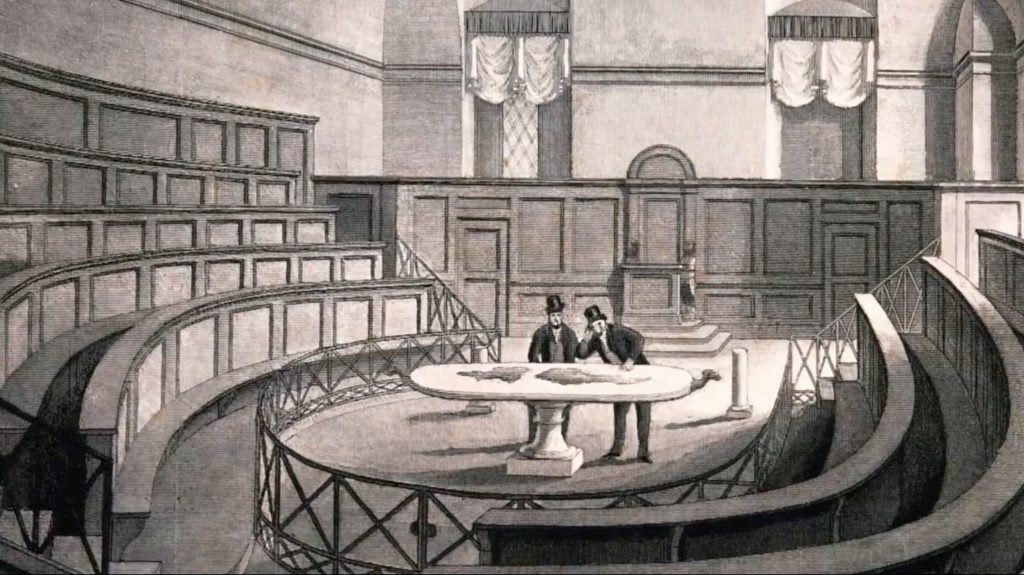
The UMB Celebrates America at 250 series began with the story of Davidge Hall, the University’s founding building and one of the most important landmarks in U.S. medical history. Constructed for the College of Medicine of Maryland (now the University of Maryland School of Medicine), Davidge Hall is the oldest building in the Western Hemisphere continuously used for medical education and is listed on the National Register of Historic Buildings.
Davidge Hall was designed with a domed anatomical theater and lecture halls modeled after leading European institutions, providing students with something rare in early America: a dedicated facility for medical education grounded in science and discovery. Within its walls, generations of physicians studied anatomy, chemistry, pathology, and clinical medicine, helping to establish Baltimore as one of the nation’s leading centers of health sciences education.
The early phase of the storytelling series took a historical tack, covering topics such as how the Civil War changed medicine and shaped UMB’s future; dentistry being conceived as a profession in Baltimore and how the world’s first dental college transformed U.S. health care; and the visionary educator who thought lawyers should receive a comprehensive, structured education rather than rely solely on apprenticeships, establishing a model at the University of Maryland School of Law that would influence legal education across the country.
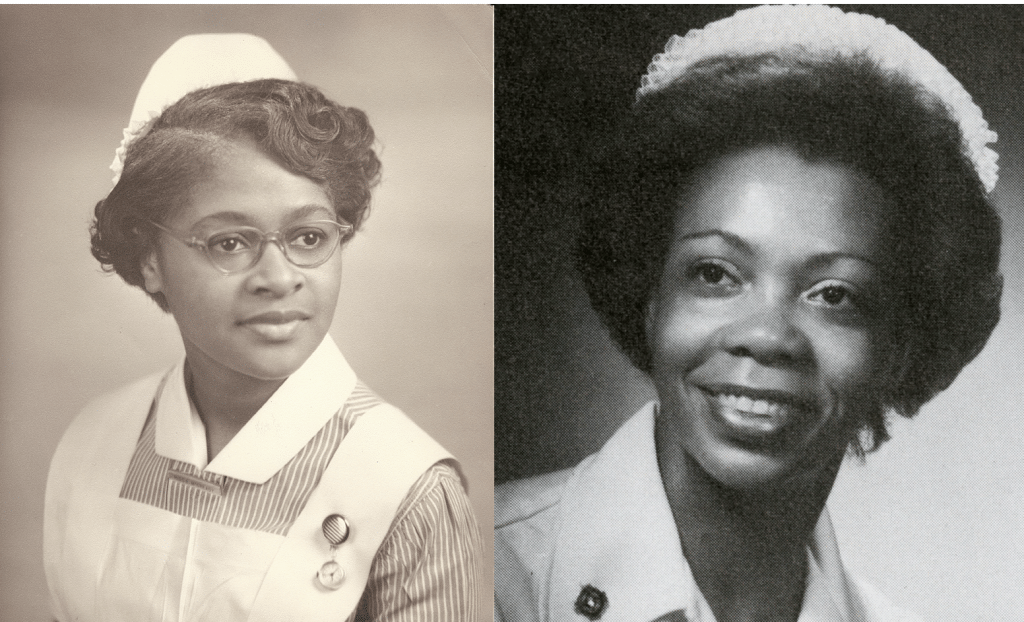
Two University of Maryland School of Nursing pioneers, Esther McCready and Shirley Nathan-Pulliam, are featured for their roles in advancing educational equality and adding a nursing perspective to public policy, respectively. Another trailblazer, Bessie Olive Cole, was one of the University of Maryland School of Pharmacy’s first female graduates, the first U.S. woman to hold a full professorship at any school of pharmacy, and served as acting dean from 1948 and 1949. Dr. Cole helped to redefine what was possible for women in higher education and the health professions.
Long before “interdisciplinary research” became a national buzzword, the University of Maryland School of Graduate Studies was championing collaboration among the health professions. Founded in 1918, the school recognized that advancing knowledge would require more than expertise in a single field. It would require bringing together diverse perspectives, experiences, and disciplines to tackle society’s most pressing challenges.
In 1961, the University of Maryland School of Social Work was founded to address the mounting social difficulties of the time and aid in UMB’s collaborative educational and clinical pursuits. For 65 years, the school has prepared thousands of social workers who have served in schools, hospitals, community organizations, government agencies, courts, veterans programs, child welfare systems, and behavioral health settings, helping individuals and families overcome challenges while strengthening communities.
Fulfilling UMB’s Mission
The latter stages of the storytelling series focused on the University’s more recent impactful contributions to the health and human services fields through education, research, clinical care, and service, with its schools, centers, and programs striving to fulfill UMB’s mission to improve the human condition and serve the public good of Maryland and society at-large.
The Center for Cyber, Health, and Hazard Strategies, founded by a Francis King Carey School of Law professor in the aftermath of the Sept. 11 terrorist attacks, is a nationally recognized leader in crisis preparedness, resilience, cybersecurity, and emergency management. The School of Social Work’s B’more for Healthy Babies program has drastically cut infant mortality rates in the Upton and Druid Heights area of Baltimore by championing community collaboration to address health inequities.
The School of Pharmacy’s Maryland Poison Center stands ready 24 hours a day, 365 days a year to answer poison-related calls and has a nearly 55-year record of excellence in prevention, education, and emergency response. The Governor’s Wellmobile, managed by the School of Nursing, is a traveling health clinic that has delivered primary care directly to underserved Maryland communities for more than three decades. In the same vein, the School of Dentistry brings oral health care services to people in Baltimore and around the state through programs such as Mission of Mercy and Special Smiles.
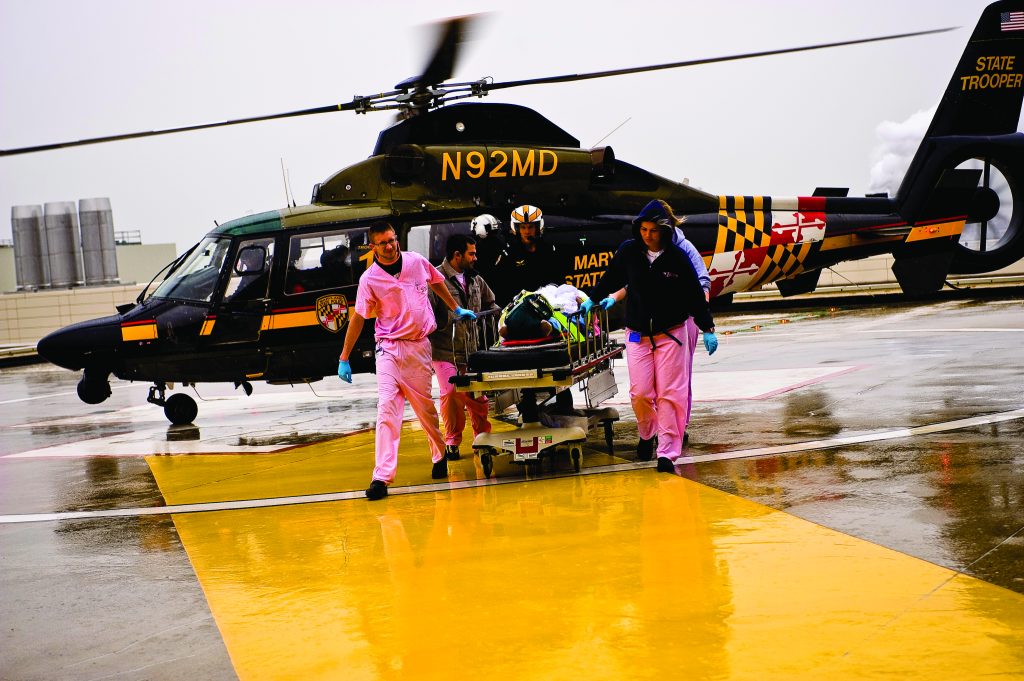
The School of Medicine’s impact has been immense, with breakthroughs in transplantation, addiction medicine, obstetrics and women’s health, cancer treatment, HIV research, trauma care, and more. The Health Sciences and Human Services Library began with a $500 investment in one doctor’s collection of medical books and grew into an institution that has been instrumental in shaping the education of generations of UMB students.
The School of Graduate Studies’ Grid Pitch competition helps graduate students and postdoctoral fellows bridge the gap between discovery and application, encouraging them to think beyond academic publications and consider how their work can address real-world challenges. The University of Maryland Strategic Partnership: MPowering the State combines the strengths of the UMB and University of Maryland, College Park campuses to spark innovation, strengthen the state’s workforce, and drive economic development.
The series also told the story of Archibald “Moonlight” Graham, who balanced studies at the School of Medicine with a baseball career and became famous 20-plus years after his death for a brief major league appearance in 1905 that was immortalized in the film “Field of Dreams.” Robley Dunglison, a School of Medicine professor and doctor to U.S. presidents such as Thomas Jefferson, is highlighted as an educator who helped define what modern medical education would become: rigorous training in anatomy, physiology, chemistry, and pathology, rather than learning primarily through apprenticeships.
Dunglison’s story and the nearly 40 others featured in the UMB Celebrates America at 250 series reveal something larger than the history of a single university. They also reflect the enduring power of education to improve lives, the importance of public service in strengthening democracy, and the extraordinary impact that can occur when knowledge is paired with purpose.