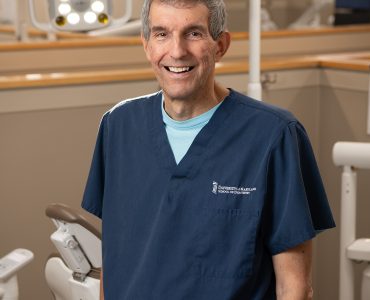

 Lorri Angelloz
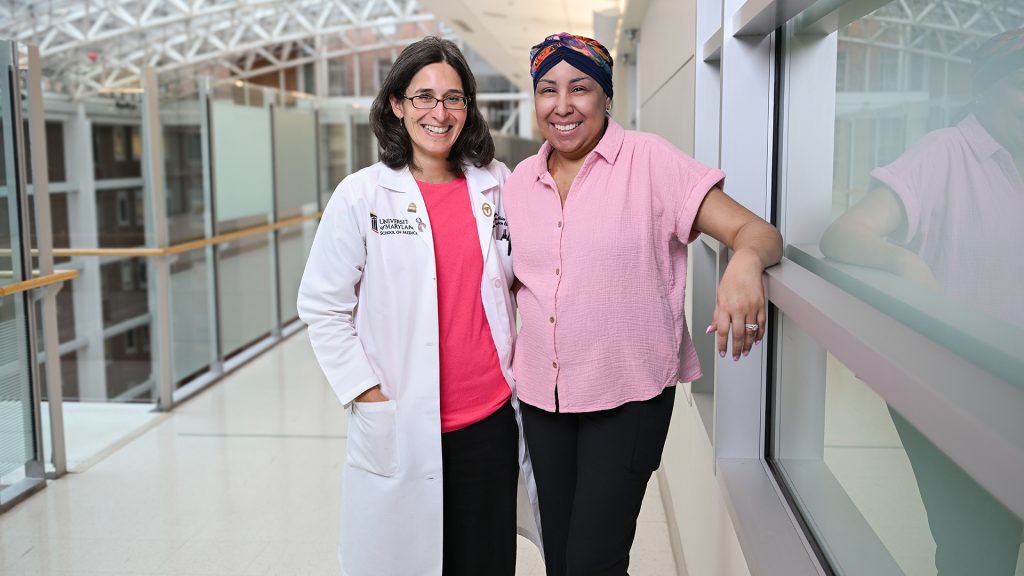
One morning, Jessica Ceja woke up, sat up in bed, and realized something extraordinary.
“I was like, oh my god, nothing hurts,” she recalled. “And I think it was one of those times that I realized that every time I woke up, I was already in so much pain — and all I did was sit up in the bed, right?”
For most people, waking up without pain is unremarkable. For Ceja, a 40-year-old mother of three who had lived with sickle cell disease since early childhood, it was almost impossible to comprehend.
For nearly four decades, pain had shaped her education, career, marriage, motherhood, and ability to make plans. Hospitalizations were so frequent that her children had come to accept them as part of everyday life.
But in April 2026, Ceja became the first adult in Maryland to receive LYFGENIA, a Food and Drug Administration (FDA)-approved gene therapy for sickle cell disease, at the University of Maryland Medical Center (UMMC).
The treatment, made possible by decades of research and delivered by a multidisciplinary medical team, offers the possibility of a functional cure for a disease that has historically been managed rather than eliminated.
For Ceja, its impact is already profound.
A Childhood Shaped by Pain
Born and raised in Washington, D.C., to parents who emigrated from El Salvador, Ceja was diagnosed with sickle cell disease around age 2. Her diagnosis was delayed, in part, because doctors did not initially suspect the disease in a Hispanic child. Although sickle cell disease is most commonly associated with people of African descent, the Centers for Disease Control and Prevention estimates that 3 to 9 percent of Americans living with the disease are Hispanic or Latino. It also occurs in Middle Eastern populations.
The inherited blood disorder causes red blood cells to become rigid and crescent-shaped, potentially blocking blood flow and triggering severe pain, organ damage, and life-threatening complications.
From an early age, those complications dictated much of Ceja’s life. Her earliest memories include being wheeled into surgery to have her spleen removed. At 18, she underwent two hip replacements, just months apart.
Later, while attending Trinity University in Washington and working part time, Ceja found that the demands of school and work were triggering increasingly frequent pain episodes. Unable to manage both, she faced a difficult choice. Continuing her education without health insurance was not an option, so she left college to work full time, sacrificing her educational goals to maintain access to medical care.
Even the weather presented a threat. Sudden temperature changes could trigger excruciating pain, regardless of how carefully she dressed or hydrated.
“I always dreaded the change in seasons, because I knew no matter what I did, it was like clockwork. I was always sick,” she said.
Still, Ceja was determined to build a life beyond her illness. When she began dating her husband, Darwin, she told him about her sickle cell disease early in their relationship. He soon experienced its challenges firsthand. During a phone conversation, Ceja was overcome by a pain crisis so severe that she couldn’t make it downstairs for help. She asked Darwin to call her mother, who was elsewhere in the house.
Before they married, the couple sought genetic counseling and had Darwin tested for the sickle cell trait. He was not a carrier, meaning their children would not inherit the disease, although each would have a 50 percent chance of inheriting the trait from Ceja.
They went on to have three children, but each pregnancy was high-risk and required specialized care. Ceja needed blood transfusions, and her hospitalizations became increasingly frequent, particularly during her third pregnancy.
Through it all, she built a career inspired by her childhood experiences as a patient at Children’s National Hospital in Washington. She has spent nearly two decades working there as an epilepsy coordinator, helping patients and families navigate complex medical care.
But being a working mother with sickle cell disease carried an emotional burden beyond the physical pain. Frequent hospitalizations meant missing time with her children, leaving Darwin and her mother to manage the household.
“I carry tremendous mom guilt,” she said. “That that’s all my two oldest, my boys, remember, me going to the hospital, and it being normal for them.”
As she approached 40, her condition worsened. Hospitalizations became more frequent, and existing treatments were no longer providing sufficient relief.
Her longtime hematologist suggested exploring a new possibility at UMMC.
A Chance at Something Different
For years, sickle cell treatment largely focused on managing symptoms and preventing complications through medications, blood transfusions, and supportive therapies. Stem cell transplantation offers a potential cure for some patients, but finding a suitable donor can be difficult. For Ceja, that challenge was compounded by limited awareness of sickle cell disease in Hispanic communities. Because patients are more likely to find a compatible human leukocyte antigen (HLA) match — the genetic markers used to determine donor compatibility — among people who share their ethnic ancestry, a limited pool of Hispanic and Latino donors can make finding a match particularly challenging.
The arrival of gene therapy offered Ceja a new possibility, one that could overcome the need for a donor altogether.
“Sickle cell disease is much more than occasional episodes of pain,” said Jean A. Yared, MD, a hematologist and medical director of Clinical Operations at the University of Maryland Marlene and Stewart Greenebaum Comprehensive Cancer Center (UMGCCC) and professor of medicine at the University of Maryland School of Medicine (UMSOM). “It’s a lifelong illness that affects patients physically, emotionally, and socially, and gene therapy offers a new kind of hope.”
Rather than relying on a donor, gene therapy uses a patient’s own blood-forming stem cells, genetically modifying them to produce a form of hemoglobin that helps prevent red blood cells from becoming rigid and crescent-shaped — a process known as “sickling” that can block blood flow and cause severe pain.
Yared and Jennie Y. Law, MD, associate section chief for Classical Hematology and Sickle Cell Disease at UMGCCC and associate professor of medicine at UMSOM, lead the development and clinical implementation of UMMC’s comprehensive multidisciplinary sickle cell gene therapy program.
The team at UMGCCC spent many months developing protocols and standard operating procedures, training personnel, and completing the rigorous qualification process required to become a Qualified Treatment Center for Gene Therapy.
For Ceja, the preparation was equally demanding.
She underwent extensive testing and repeated hospital admissions to mobilize and collect her blood stem cells for genetic modification. The process, known as apheresis, involved specialized equipment that separated stem cells from her blood.
Eventually, enough cells were collected and sent to a specialized facility for genetic modification to express a healthy non-sickling form of hemoglobin. After the cells were returned, Ceja underwent chemotherapy to clear out the blood-forming stem cells in her bone marrow, creating space for the genetically modified cells to take place.
On April 27, she received the gene therapy infusion that could change her life.
The procedure itself resembled a blood transfusion. The recovery was considerably more difficult.
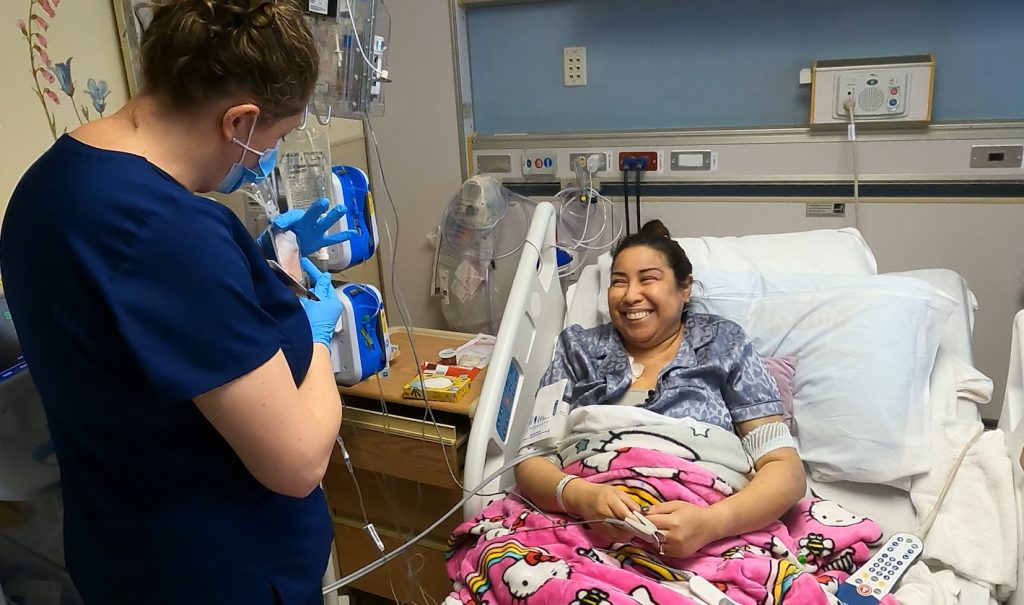
Ceja experienced the expected chemotherapy side effects, including low blood counts, mouth sores, hair loss, profound fatigue, and loss of appetite. She spent approximately a month hospitalized, followed by weeks of close monitoring and additional treatment.
But as her blood counts recovered, the team began seeing encouraging results.
“We’ve been really excited to see that her hemoglobin has stayed in the double digits, which is unheard of for people with sickle cell,” Law said. “And she has not had a recurrence of any sort of acute, painful episodes related to her disease.”
For Ceja, those results offer the possibility of a life no longer dominated by sickle cell disease. For her physicians, they represent a milestone in bringing a potentially life-changing treatment to more patients.
“Jessica was the first, but not the last, patient who will receive this treatment. Our ambition is for her story to be the beginning of something much bigger,” Yared said, noting that two additional patients have since undergone the procedure at UMMC.
The Power of Academic Medicine
Ceja’s treatment demonstrates the importance of academic medical centers in bringing scientific advances into clinical practice.
“When I was in medical school, gene therapy was almost like science fiction — the idea that we could treat a genetic disease by modifying a patient’s own cells,” Yared said. “Now, after decades of research, we’re able to offer this FDA-approved treatment at the University of Maryland Medical Center. But delivering something this complex requires an extraordinary level of expertise, infrastructure, and coordination among a multidisciplinary team.”
UMMC built its sickle cell gene therapy program on experience in stem cell transplantation and cellular therapies, including CAR T-cell therapy. Delivering the treatment required collaboration among sickle cell disease specialists, transplant physicians, specialized nurses, pharmacists, laboratory personnel, and stem cell collection and processing teams.
“I think an academic center is really comfortable with intensive, very involved, multilevel care coordination,” Law said.
The benefits also extend to medical education. As a UMSOM faculty physician and alumna, Law sees an opportunity to train future clinicians in sickle cell care as new therapies emerge. Students and residents can now witness how advances in research are transforming treatment for patients who, for decades, had relatively few options.
That clinical expertise is also opening new avenues of research at the University of Maryland.
Yared and his colleagues are participating in a partnership supported by the Maryland Stem Cell Research Fund, working with industry collaborators to explore a more efficient and potentially less expensive way to genetically modify patients’ stem cells.
“Commercially available gene therapy currently costs between $2 million and $3 million per patient,” Yared said. “Our goal is to develop a decentralized, partnership-powered point-of-care platform that could eventually bring that cost down to a few hundred thousand dollars by manufacturing the modified cells on-site in an affordable, rapid, and scalable way. It’s still very early, but we believe this research has the potential to significantly expand access to these life-changing treatments.”
The potential is especially significant in Maryland, where more than 5,000 people live with sickle cell disease and the state ranks fifth nationally in prevalence. For patients who have historically faced barriers to specialized care, more affordable treatment could make a profound difference.
Learning to Live Without the Pain
For Ceja, the changes are becoming apparent in moments that once seemed impossible.
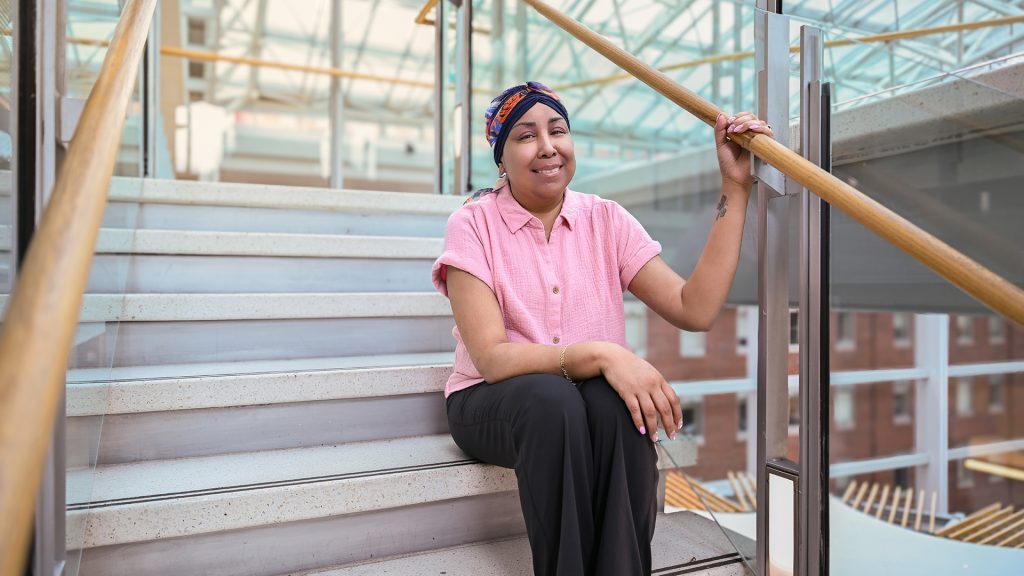
She can wake up without the familiar pain that followed her throughout her life. She can imagine planning a family vacation months in advance rather than waiting to see whether she feels well enough to travel. And when the weather turned cooler this fall, she did not experience the severe pain crisis she had come to expect with every seasonal change.
Perhaps the most meaningful sign of progress came from a few words from her 14-year-old son.
“I think they still don’t realize the gravity of this. Because they’re so young, they don’t really understand the concept of gene therapy and what mommy did,” Ceja explained. “But my middle child, he recently said, ‘Mom, you haven’t been to the hospital for a while.’ I also didn’t realize it had been a while since I had been sick and hospitalized — it’s amazing. And hopefully I won’t ever be again.”
Yared is careful not to declare Ceja cured, emphasizing that years of follow-up will be needed to establish the treatment’s long-term safety and effectiveness. But for Ceja, the difference it has already made is undeniable.
Ceja thinks about the researchers whose years of work made her treatment possible.
“I think that their research is so important,” she said. “All of their hard work did reach the population that they wanted to, and I am an actual person that benefited from it. They have no idea the impact that they’ve had on my life.”
For someone who spent nearly 40 years living with the limitations of sickle cell disease, the future has taken on an entirely different meaning.
“I feel like a new chapter started when I got the gene therapy,” Ceja said. “I think that’s amazing, that I’ve been gifted this opportunity of a healthy life, a normal life.”