 Lorri Angelloz
What defines a great university? Is it groundbreaking research? Exceptional education? A lasting impact on the communities it serves?
At the University of Maryland, Baltimore (UMB), it’s all three. And the University’s latest national recognition provides further evidence of its commitment to excellence and making a meaningful difference in people’s lives.
In 2026, UMB earned the prestigious Carnegie Elective Classification for Community Engagement, joining a select group of just 100 institutions nationwide that hold both that designation and the Research 1 (R1) classification for very high research spending and doctorate production.
Together, these two nationally recognized distinctions affirm UMB’s strengths in research and its commitment to putting knowledge to work through meaningful community partnerships.
At a time when higher education institutions are increasingly being asked to demonstrate their value, the classifications offer compelling evidence of UMB’s contributions to scientific discovery, professional education, and the public good.
“Our responsibility as a public university goes beyond educating students, conducting research, and treating patients,” said UMB President Bruce E. Jarrell, MD, FACS. “It’s also about ensuring that the knowledge we generate and the professionals we prepare make a difference in the world. The Carnegie Classifications reflect the importance of that responsibility and our commitment to fulfilling it.”
Independent Recognition of Excellence
The Carnegie Classifications are among the nation’s most widely recognized frameworks for identifying the characteristics and activities of colleges and universities.
UMB was among 187 institutions nationwide to receive the R1 designation in 2025, reflecting the scale of its research enterprise and doctoral education. The classification is based on objective measures of research expenditures and research doctorate production.
The Carnegie Community Engagement Classification, awarded in 2026, recognizes a different but complementary institutional strength. Administered by the American Council on Education in partnership with the Carnegie Foundation for the Advancement of Teaching, the designation is awarded through an extensive application process examining how universities integrate reciprocal community partnerships into their teaching, research, and service.
For an institution dedicated to improving the human condition through education, research, clinical care, and service, these distinctions reflect how UMB puts its mission into practice every day.
Where Research Meets Real-World Needs
At UMB, discovery begins with a commitment to making lives better.
Across its seven schools, researchers, clinicians, faculty, and students work to do that by addressing challenges in health, science, law, and social policy.
Their work ranges from developing new vaccines, medicines, and technologies to improving the delivery of health care, strengthening communities, and informing public policy.
UMB’s R1 status reflects the substantial research infrastructure and doctoral education that make such discoveries possible. In Fiscal Year 2025, the University attracted $636 million in extramural research funding, supporting work with implications for Maryland and communities around the world.
But research is only part of the story.
The Carnegie Community Engagement Classification recognizes the University’s commitment to ensuring that knowledge is informed by, and put to work alongside, the people and communities it is intended to benefit.
“There’s sometimes a perception that universities have to choose between being major research institutions and being deeply engaged with their communities, but UMB demonstrates that those priorities can go hand in hand,” said Bill Joyner, JD, MSW, assistant vice president for community engagement and partnerships. “Earning the Carnegie Community Engagement Classification builds on UMB’s recognition as an R1 research institution, and it marks another milestone in our ongoing efforts to make community engagement central to the University’s mission and academic culture.”
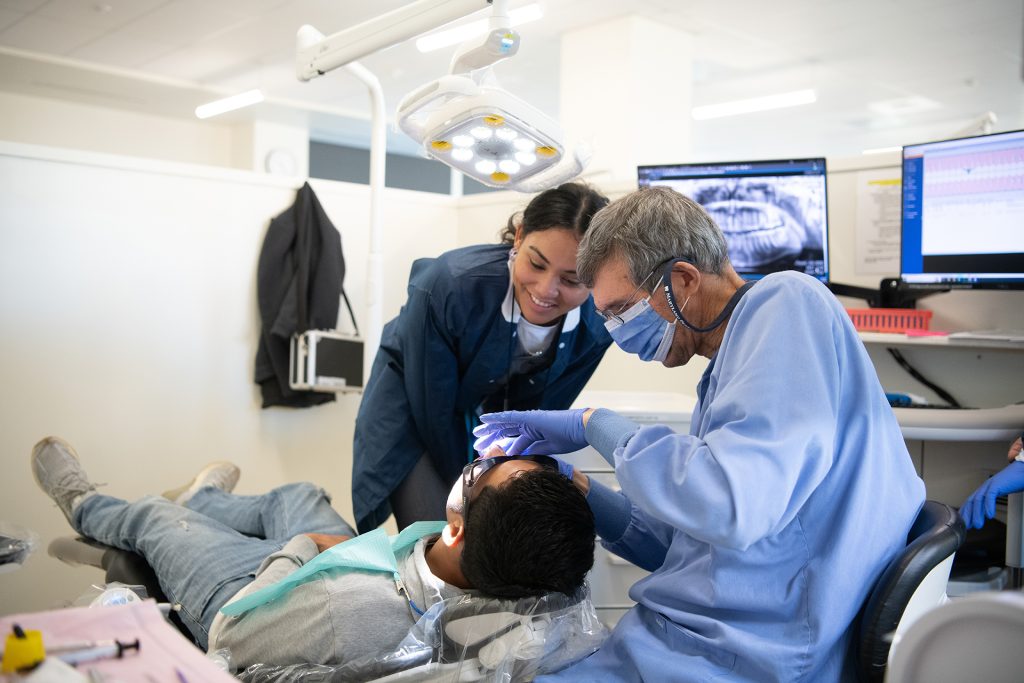
That integration takes many forms, connecting UMB faculty, students, and researchers with Baltimore residents and community organizations through health education, clinical services, legal assistance, community-engaged research, and other initiatives.
These partnerships also strengthen the University’s research and educational mission, giving students opportunities to apply what they learn while gaining a deeper understanding of the communities they will work in as professionals.
One example of that approach can be seen in community-engaged health initiatives, which bring together researchers, clinicians, and students across UMB’s seven schools together with community organizations. Together, they work to address challenges including chronic disease, health disparities, and access to care.
Esa Davis, MD, MPH, associate vice president for community health at UMB, helps connect faculty with community partners and clinical systems such as the University of Maryland Medical Center. For Davis, the success of these efforts depends as much on how those relationships are built as on the work itself.
“What makes UMB’s approach distinctive is that we don’t just talk about community engagement, we show it through sustained partnerships,” Davis said. “We work with community leaders, nonprofits, and faith-based organizations to understand what communities need and how we can address those challenges together. That kind of partnership takes time to build, and the Carnegie designation recognizes that commitment.”
Demonstrating the Value of Higher Education
The two Carnegie distinctions also help answer a question increasingly being asked of colleges and universities: What does higher education contribute to the people and communities that support it?
At UMB, the answer can be found in the professionals it prepares, the discoveries it advances, and the partnerships it builds.
The University’s graduates enter careers in medicine, nursing, dentistry, pharmacy, social work, law, research, and other fields essential to Maryland’s health, well-being, and economic vitality. Its researchers pursue solutions to challenges that affect patients, families, and communities.
Together, the University’s Carnegie distinctions reinforce a central idea: Excellence in higher education is not simply something an institution claims. It can be demonstrated through sustained achievement, meaningful engagement, and the difference a university makes beyond its campus.