
 Jen Badie
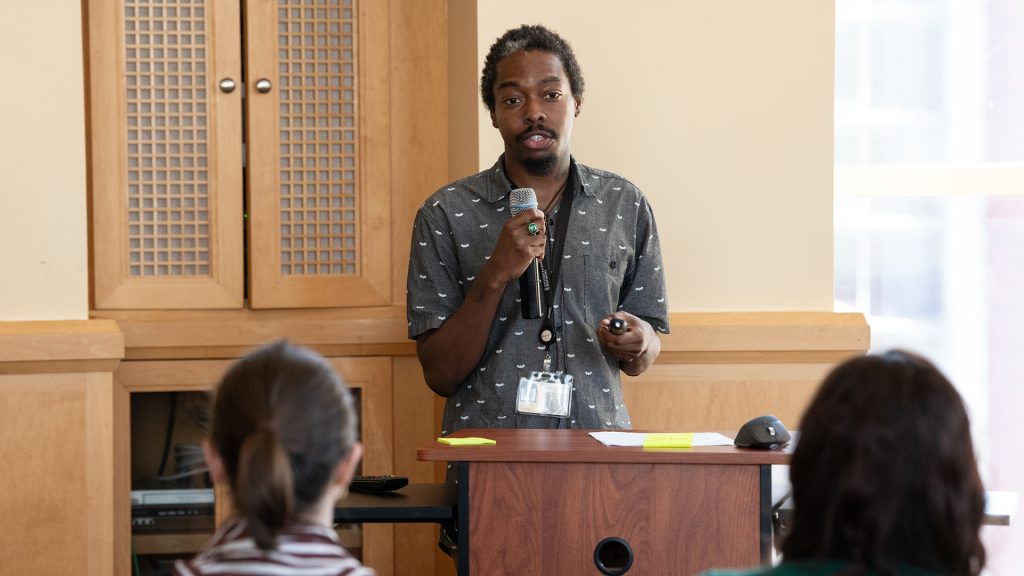
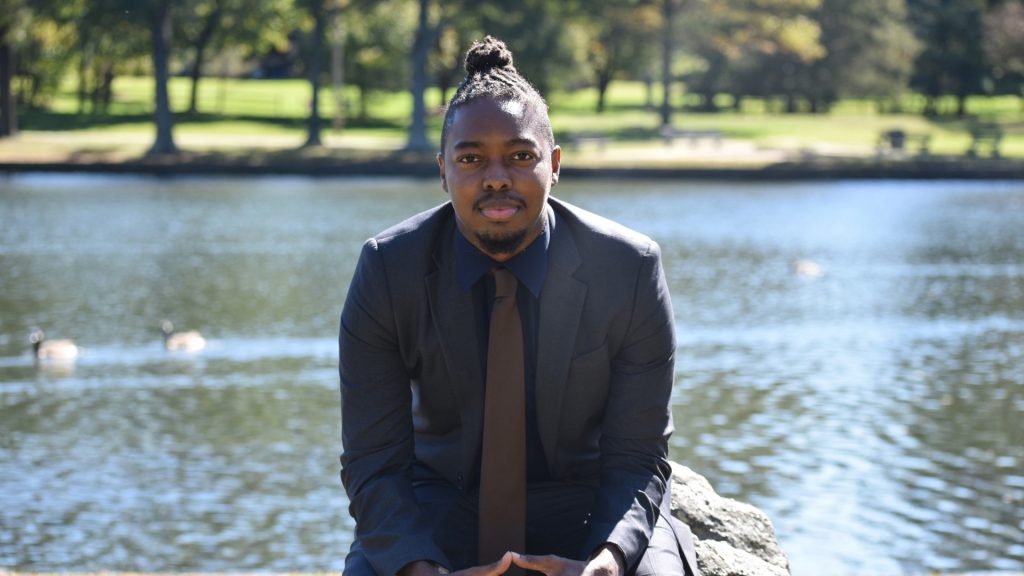
When Travis Young, MS ’19, MA, CAADC, QMHP, NPT-C, was a student working toward his Master of Science in forensic medicine at the University of Maryland, Baltimore (UMB), he participated in the University’s President Student Leadership Institute, completing two tracks: Career Development, and Scholarly Research and Teaching.
This career preparation put Young on a path to return to his alma mater six years later as an educator, helping to shape the next generation of forensic professionals as assistant program director, Forensic Medicine, and co-instructor of the Epidemiology Data Research Capstone Project.
“The University is committed to its graduates by creating opportunities for alumni to return and contribute to the institution,” Young said. “I am proud to be one of those alumni. Returning to the University allows me to give back to a place that played a significant role in my professional development and now my continued growth as an educator.”
Young is one of hundreds of faculty members at the University who are alumni, now passing on their knowledge and experience, teaching and mentoring future health care, legal, and social work professionals.
For example, Young’s alma mater, the School of Graduate Studies (UMSGS), has over 100 faculty members who are alumni, including adjuncts and affiliates. The School of Nursing (UMSON) has 102 regular faculty members who are alumni (including certificate programs) as well as 10 members of its senior leadership, including Dean Yolanda Ogbolu, PhD, NNP, FNAP, FAAN, who earned her PhD, MS, and BSN degrees all from UMSON.
The School of Pharmacy (UMSOP) has 15 full-time faculty members who are alumni as well as 10 adjuncts, while the Francis King Carey School of Law has two full-time faculty members and dozens of adjuncts who have returned to teach. The School of Social Work (UMSSW) has several dozen alumni teaching at the school. The Schools of Dentistry (UMSOD) and Medicine (UMSOM) do not track this information, though both have numerous faculty members who are alumni.
According to a study in Nature, which examined faculty hiring and retention patterns at PhD-granting institutions in the United States between 2011 and 2020, professors employed by their doctoral university (which the study called “self-hires”) accounted for roughly 1 in 11, or 9 percent, of all U.S. professors. The study found that the self-hire rates were higher than expected across individual fields, including 29.3-fold in nursing. Self-hire rates were highest in the fields of medicine and health (16.7 percent).
Kenneth H. Wong, PhD, vice provost for graduate education and UMSGS dean, said having alumni return as faculty members benefits UMB as well as its students.
“Alumni are uniquely invested in maintaining the rigorous academic standards and excellent reputation of UMB,” he said. “They also know our educational culture and want to give back to their professions. So it is a tremendous benefit when they want to share that knowledge and experience with the next generation. Plus, when our current students interact with our alumni, those students can see themselves as future leaders and educators, forming vital links between past, present, and future.”
A Second Act
When Adam Eisner, DDS ’89, FICD, FACD, program director, Advanced Education in General Dentistry, and senior instructor, Department of Comprehensive Dentistry, UMSOD, was president of the Alumni Board of Directors in 2017, then-Dean Mark A. Reynolds, DDS, PhD, who is now UMB’s interm provost and executive vice president, suggested he volunteer in the predoctoral program. A year later, Eisner began his teaching career at UMSOD.
“I soon discovered that my days at UMSOD were the most enjoyable days of my week,” Eisner said. “This realization led me to sell my private practice in Silver Spring in the fall of 2018 and apply for a full-time position at UMSOD.”
Eisner, who teaches classes to UMSOD residents including Clinical Dentistry, Practice Management, Digital Dentistry, and Restorative Dentistry, said he would advise UMB alumni to remain open to the possibility of teaching, even if it is not part of their immediate plan.
“I never anticipated that the second act of my dental career would be as an educator,” he said. “My professional growth has been shaped by mentors, colleagues, institutional leaders, and the residents and students I have worked with.”
Returning Almost Immediately
Unlike Eisner, Cherokee Layson-Wolf, PharmD ’00, BCACP, FAPhA, professor of practice, sciences, and health outcomes research, UMSOP, returned to her alma mater to teach almost immediately after graduation. She completed her community pharmacy residency at Virginia Commonwealth University (VCU) in June 2001 and a month later was back in the classroom at UMSOP.
She said she was introduced to teaching when she served as a teaching assistant during her third year of pharmacy school.
“During my community pharmacy residency at VCU in Richmond, I was exposed to advanced pharmacy practice that included vaccinations, which was different than what we had in Maryland,” she said. “I wanted to share with our Maryland students and help advocate to advance pharmacist immunization practice in the state. That is a common theme in my teaching and engagement with students.”
Layson-Wolf, who has served as a vaccination trainer for 20 years and collaborates with the Health Sciences and Human Services Library on an annual vaccination clinic at UMB, was drawn back to UMSOP by the idea of teaching alongside her mentors.
“The opportunity to work along faculty who taught and inspired me as a student was certainly a draw,” she said. “I have truly benefited from having my former professors and now colleagues and school leadership continuing to support and champion our alumni faculty and students. This school and students helped push me out my comfort zone, and still does, and I hope it does the same for others.”
The Nontraditional Route
Russell McClain, JD ’95, professor, associate dean of institutional engagement and experience, and director, Academic Achievement Program, Maryland Carey Law, said he took a nontraditional path to teaching. From 1995 to 2005, he worked as a civil litigator in Los Angeles.
McClain, who returned to his alma mater a decade after his graduation and teaches Contracts and Legal Profession (Ethics), said he did not think of becoming a professor until shortly before he returned to his alma mater.
“I think we could benefit from letting our students know that teaching is an option for some of them down the road,” he said.
He added that his time at Maryland Carey Law as a student was transformative.
“It changed the trajectory of my life, truly,” he said. “When I had the chance to join the law school in 2006, it was like coming home. It provided me with the opportunity to pay forward all that the law school gave me.”
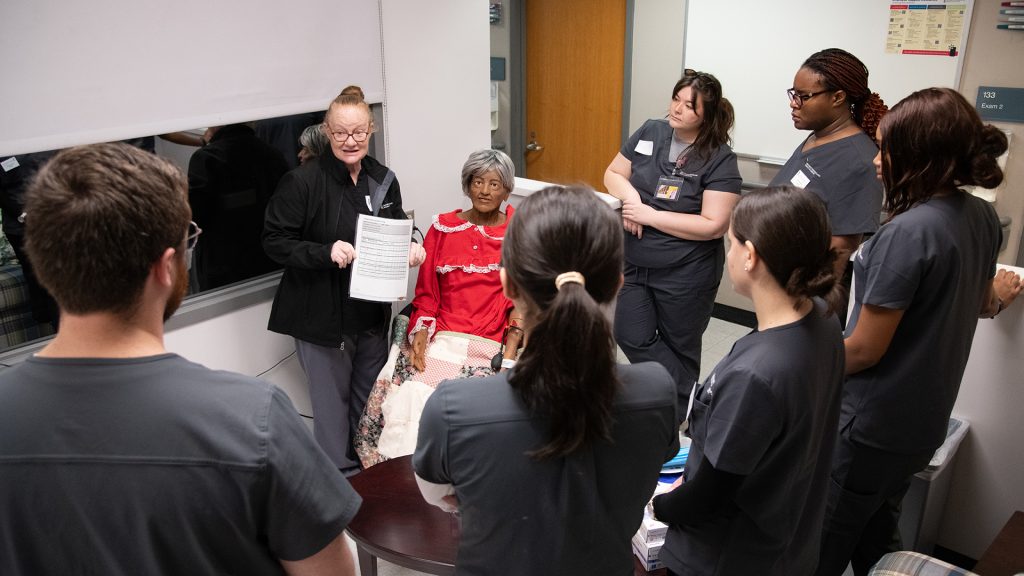
Amy L. Daniels, PhD ’18, RN, CHSE-A, CNE, associate professor, and director, Debra L. Spunt Clinical Simulation Lab, agreed. Daniels, who is a three-time graduate of UMSON, earning her BSN, MS, and PhD from the institution, returned to the school in 2010, nearly a decade after earning her BSN.
Daniels said she is grateful to not only be an alumna but also to be part of the community of educators at UMB.
“I will always feel connected to the school,” said Daniels, who teaches simulation-based educational activities in clinical courses in undergraduate and graduate programs. “It is home for me.”
Shaping All Students’ Experiences
Numerous alumni across UMB hold administrative or leadership positions, such as Donna L. Parker, MD ’86, professor, Department of Medicine, senior associate dean for medical education, and chief academic officer, Medical Education Program, UMSOM, who graduated 40 years ago. She joined the faculty in 1992.
“Early on, I loved working directly with students on the wards, in small groups, and in clinical skills sessions. Over time, my interests expanded beyond teaching individual learners to improving the educational experience for all students,” she said. “That led me into leadership roles in admissions, student affairs, curriculum development, faculty development, and ultimately medical education administration. Today, I have the privilege of helping shape the educational experience of every medical student at Maryland.”
She said she still sees herself as a teacher, but with a classroom that has expanded from a small group of students to the entire medical school.
“I am particularly passionate about preparing future physician leaders and helping students develop not only the knowledge and skills of medicine but also the professionalism, resilience, and sense of purpose needed for a meaningful career,” she said, adding, UMSOM “helped shape who I am as a physician, educator, and person.”
Mentorship Matters
Many of the faculty members who were interviewed for this story emphasized how important mentorship has been for them, both as students and educators at their alma maters.
When Jodi Jacobson Frey, PhD ’04, MSW ’98, LCSW-C, CEAP, professor and associate dean for research, UMSSW, returned to the school to teach two years after earning her PhD, she worked with her primary mentor, Donna Harrington.
“That transition from student to colleague was a particularly meaningful experience,” Frey said. “Many continued to mentor me, offering guidance not only on teaching, research, and navigating an academic career, but also on balancing the demands of academia with family and personal life. Their example helped shape the kind of professor, mentor, and colleague I have tried to become.”
She said Harrington in particular was kind, generous, and supportive. Frey has been that mentor to her own students, paying that generosity forward, and was recognized with the inaugural Donna Harrington Exemplary Faculty Mentor Award in 2023.
“Receiving an award in Donna’s name, particularly one recognizing mentorship, was incredibly meaningful to me,” said Frey, who has taught MSW and PhD courses over the years including Social Work Research and Intervention Research. “I can only hope to pass along some of the same generosity, encouragement, and guidance that she so freely gave to me.”
McClain recalled taking a mock class with Richard Boldt, JD, Distinguished University Professor and T. Carroll Brown Professor of Law, and struggling to answer questions during class.
“He persisted with me, demonstrating to me that he believed I could meet his expectations,” McClain said. “Eventually, I had a breakthrough — it was a single moment where I suddenly realized I could do it. I saw in Professor Boldt’s eyes that he saw me realize it. This was the catalyzing moment that, I truly believe, changed the course of my life.
“As a professor, the best moments are when I model what Professor Boldt showed me. I try my hardest to let my students know that I believe in their capacity for greatness, and I revel when they prove me right.”
Boldt and McClain have been named UMB Educators of the Year this decade.
Parker, who was part of a UMSOM team that won the UMB Educator of the Year Award in 2021, said she had mentors who influenced her professional path at different times in her career. Susan Wolfsthal, MD, for example, taught Parker during her internal medicine clerkship and later became her direct supervisor when she returned to Maryland for her first faculty position.
“At a time when there were relatively few women in leadership roles in academic medicine, she provided a powerful example of what was possible,” Parker said.
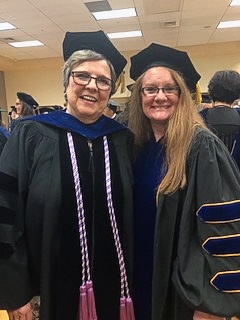
“My mentors shared a commitment to investing in people. They taught me far more than medicine. They modeled leadership, generosity, professionalism, and the importance of helping others recognize their strengths. One of the greatest privileges of my career has been the opportunity to work alongside people who once taught and mentored me.”
When Daniels returned to teach, three faculty members who taught her were still at UMSON.
“I learned more from and about them from a completely different perspective,” she said. “I wanted to continue to make them proud of their work as educators.”
She was a student when Debra Spunt was an instructor.
“Now, as the director of the Debra Spunt Simulation Labs, I always want to support and carry on her legacy of using simulation as a transformative way to learn the art and science of nursing.”
Lifelong Learning
Young was previously a counselor in addiction, corrections, and mental health. He had developed a five-year goal of moving to an administrative role and a 10-year goal to transition from direct counseling and give back to the profession through group facilitation, continuing education, and professional development, training future counselors and contributing to policy and treatment-program development.
“My role at UMB provides me with the opportunity to do both tasks,” he said. “Returning to UMB represents a goal accomplished with the chance to take everything I learned throughout my counseling career and use that experience to give back, support students, and contribute to the next generation of forensic professionals.”
He added that he would tell students considering a career in teaching to challenge themselves with continuing education each semester in their area of expertise and in topics related to teaching, professional development, and classroom management. After joining UMB’s faculty, Young participated in the University’s Educator Development for Growth and Effectiveness Fellowship, designed for newer teaching faculty.
“Being an effective educator means being a lifelong learner,” he said.
Some of the educators called returning to teach at UMB a “ripple effect.”
“Education is one of the most powerful ways to multiply your impact,” Parker said. “Every patient you care for matters, but every student you mentor will go on to touch thousands of lives over the course of a career. That ripple effect is extraordinary.”
Frey said preparing the next generation of social workers is a tremendous responsibility and a great privilege.
“One of the things I value most about being a professor is knowing the impact of our work extends far beyond the classroom,” she said. “Every student I have the privilege of teaching or mentoring will go on to influence countless individuals, families, organizations, and communities throughout their career. That ripple effect is far greater than anything I could ever accomplish alone.”