
 Jen Badie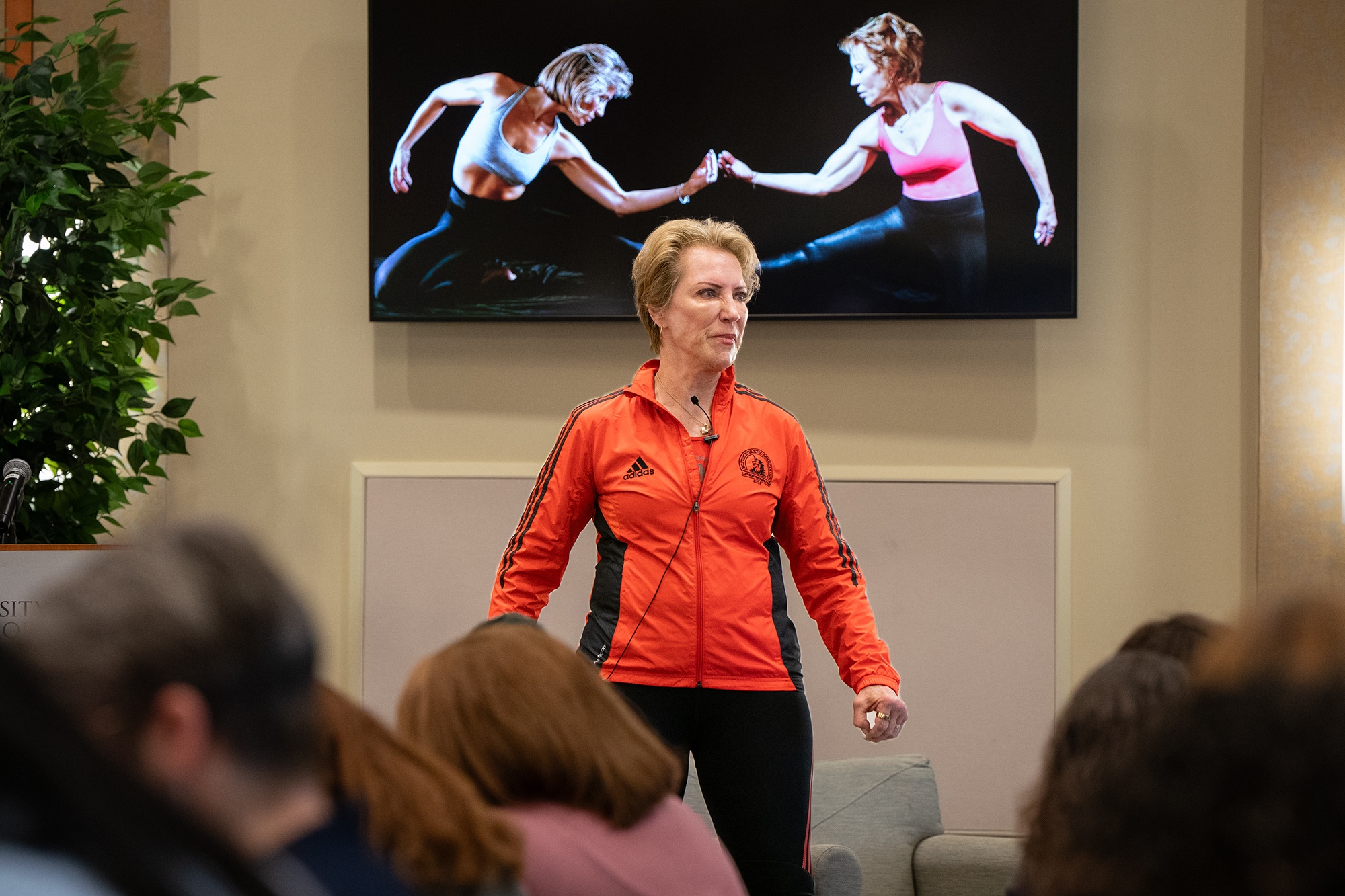
Thriving was the theme of the University of Maryland, Baltimore’s (UMB) Seventh Annual Women’s History Month Symposium on March 4, as the featured speakers and workshop presenters emphasized health, wealth, and resilience.
The morning keynote speaker at the daylong event was Pamela Peeke, MD, MPH, FACP, FACSM, founder of the Peeke Performance Center for Healthy Living and adjunct assistant professor of family medicine at the University of Maryland School of Medicine. The afternoon included a fireside chat moderated by Tisha Edwards, JD ’01, MSW ’00, president/CEO of the Maryland Bankers Association and member of the University System of Maryland Board of Regents, and featuring The Washington Post’s Michelle Singletary, MS, who writes “The Color of Money” personal finance column.
Here are four takeaways from the event:
1. Pictures can be deceiving.
Peeke showed the audience of about 200 a photo of herself from 40 years ago when she was in medical training in which she posed for a photographer who was looking at the shadowing in women’s muscles. The picture was combined with a recent photo of herself in which she did the same pose.
“I found the slides a year ago and decided to have some fun,” she said. “Can I still do those poses? And I did it, and my photographer decided to play around a little bit, and he came up with this [combined] picture. It was kind of wild.”
Despite appearances, it was difficult to replicate the photo.
“Some of those poses kind of hurt,” she said. “That first one, I made it look easy. You don’t want to know how I felt.”
Peeke said the photos were the basis for the new book she is writing and asked the audience to scan a QR code and write down the first words or phrases they thought of when they saw the photos. She says she plans to include some of the comments in the book, which examines the changes to your body as you age.
2. Your past informs your present.
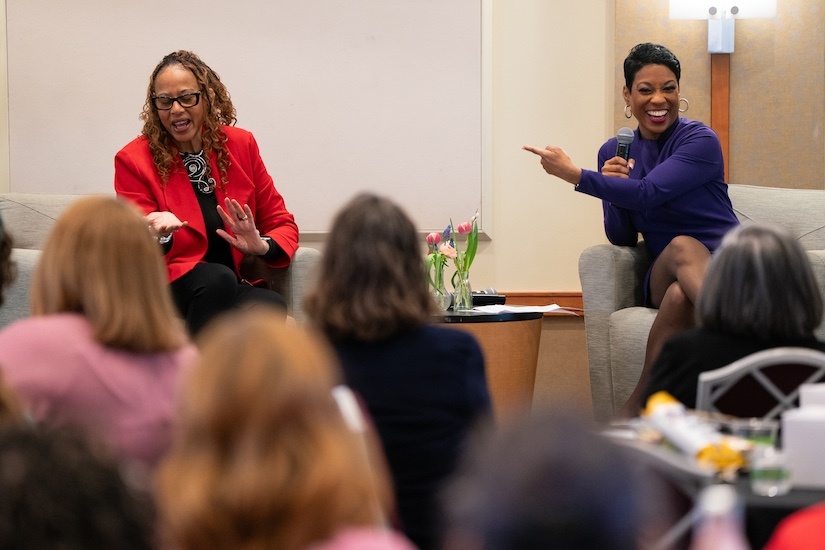
Singletary talked about growing up in Edmondson Village in Baltimore and how she and her siblings were raised by her grandmother who was “amazing with money” but still worried about it.
On Fridays, Singletary said, her grandmother would put the kids in the station wagon and drive around looking for her husband, who was an alcoholic, trying to find him before he spent his paycheck.
“If we didn’t get to him in time, somehow my grandmother always made it enough,” she said. “I learned under her tutelage. She paid all of her bills on time.
“She worried about money all the time, so she passed that on to me. I’m a good money manager, but I’m also a good money worrier.”
Edwards shared her experiences, too, saying her mother and grandmother raised her.
“I grew up in a house where you didn’t talk about money. You didn’t talk about what you had or didn’t have,” said Edwards, who recalled her mother saying a prayer with her hand over her bills every Sunday evening.
“Even now, I pray over my finances, and that’s something that I got from my mother,” Edwards said. “But I also got that ‘Let’s not talk about it’ [mentality], so it’s been hard for me to mature and develop voice around money and talking about it openly.”
3. What you wear can matter — but maybe not in the way you think.
Singletary discussed how she counseled women inmates about money at a local prison and afterward had an appearance on “Meet the Press,” which is watched by millions. She wore the same outfit for the TV show as she did at the prison. She returned to the prison for a second session later that day, and an inmate told her that wearing the same outfit had made an impact on her.
According to Singletary, the inmate said, “You must value me as much as you value the people who watch the show.”
Singletary told this story as she explained budgeting: There is no line item in her budget for clothing.
“You have to care about things that are important,” Singletary said.
4. The marathon is a metaphor for life.
Peeke said she was training for the New York Marathon with her Peeke Performers for Prevention Magazine and was asked for a motto to put on a T-shirt they would wear after the race. She responded, “The marathon is a metaphor for life.”
She talked about the different places you might be in your life using the milestones in the marathon, which is 26.2 miles.
“When you’re young, you start out, and that’s exactly what you do in the beginning of your marathon, you’re like, ‘Watch me. I’m so good.’ And then you hit the half-marathon around age 50. And then you say, ‘Look at me.’ And then you say, ‘Oh, my God, I’ve got to do this again. Look how far I came, my little achievements.’ ”
She then talked about Mile 20, equating it to where she is in her life.
“This is where the party starts,” she said. “Every mile, every year in our lives are so special. We have to kind of squeeze out of it what we can.”