
 Philip A. Mackowiak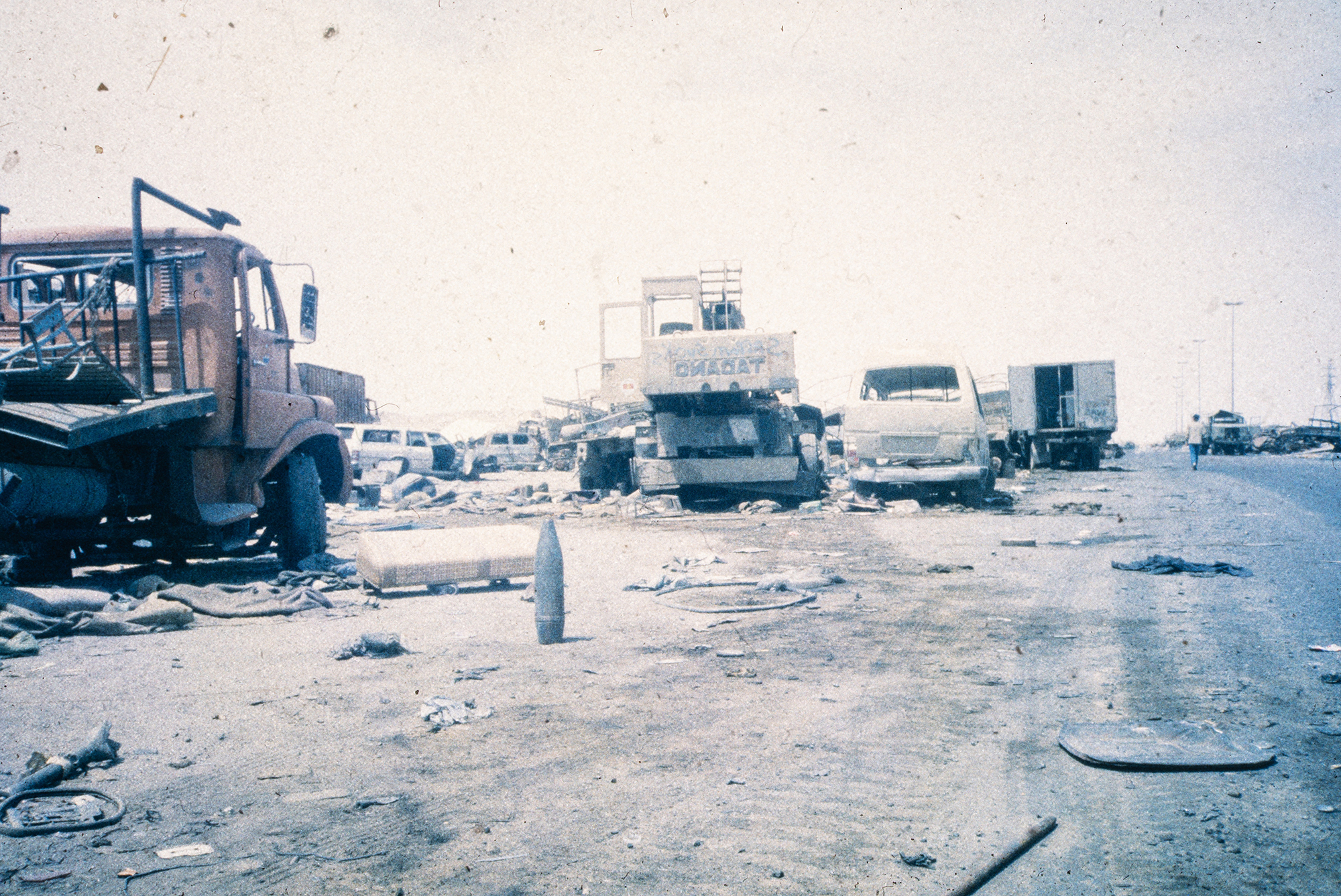
Editor’s Note: In August 1990, Iraq invaded its small neighbor Kuwait. A coalition including the United States launched Desert Storm in January 1991, a military campaign that ended the war. Then-Maryland Gov. William Donald Schaefer visited Kuwait and signed a trade-and-aid agreement that allowed Maryland companies to compete for business in Kuwait and promised medical aid from Maryland to the war-torn country. In May 1991, a group of medical professionals — known as the Kuwait 38 — traveled to Kuwait to provide medical assistance.
Philip A. Mackowiak, MD, MBA, was the new chief of medicine at the Baltimore VA Hospital and professor and vice chair of the Department of Medicine at the University of Maryland School of Medicine (UMSOM) at the time of the trip. He is now Professor Emeritus at UMSOM.
Iraq invaded Kuwait on Aug. 2, 1990, to seize control of its vast oil reserves, stop alleged slant-drilling into its own oil fields, and abolish a $9 billion debt owed to Kuwait for financial assistance it provided during Iraq’s war with Iran. In just two days, Iraq overran Kuwait and fully occupied its tiny neighbor.
Given the importance of Kuwait’s oil to the global economy, a coalition of 42 nations headed by the United States responded immediately with a military buildup in Saudi Arabia known as “Desert Shield.” By Jan. 17, 1991, the coalition was ready to confront Iraq and launched “Desert Storm,” a campaign that, in little over a month, drove the Iraqis from Kuwait and effectively obliterated its military.
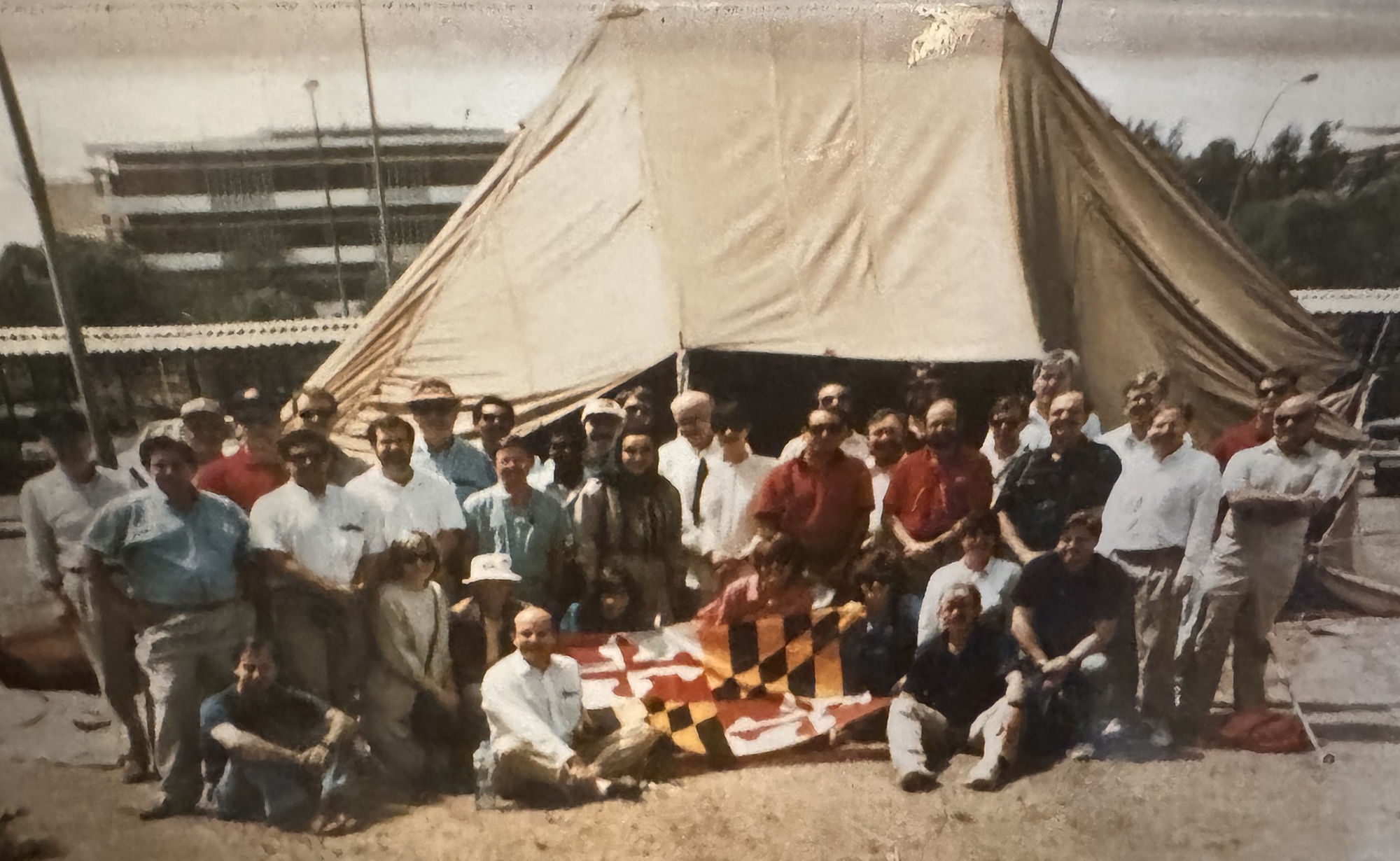
During the conflict, Maryland Gov. William Donald Schaefer was in constant contact with the emir of Kuwait trying to ensure a place for Maryland companies in the rebuilding of the country once the war was over. As part of the negotiations, a team of Maryland health care experts was formed to travel to Kuwait to attend to the medical needs of the war-ravaged country. A team of 38 Maryland physicians, nurses, social workers, and medical administrators, known as “the Kuwait 38,” of which I was a part, responded to Schaefer’s call for volunteers to go to Kuwait on a 1991 mission of mercy.
Although most of us were attracted to the mission by the prospect of using our expertise to tackle epidemic disease and care for trauma patients, only later did we learn that neither were being seen in Kuwait in the aftermath of the Iraqi occupation. The Iraqis had tortured some 1,000 Kuwaiti citizens, but because the torture mostly culminated in the death of the victim, there were few victims who required follow-up care. Moreover, the population of Kuwait had dipped well below half of its pre-invasion size, so what was left of the resident medical staff and the damaged municipal infrastructure was more than adequate to support the remaining citizens. As a result, our mission became one of fact-finding, rather than trauma care, and efforts to generate business for Maryland companies and medical schools.
Sunday, May 19
Our odyssey began in a three-minivan caravan transporting us to New York City, where we boarded a flight that took us to Frankfurt, Germany, and then on to Dhahran, Saudi Arabia.
Monday, May 20
We arrived in Dhahran at 11:15 a.m. (Saudi time) at a massive military base bristling with what seemed like an endless number of fighters, bombers, and transport planes. During the 7½-hour flight from Frankfurt, having heard nothing from our taciturn leader, the Maryland secretary of health, we spent our time speculating on what we might find when we arrived in Kuwait.
Tuesday, May 21
We spent the day shopping in Dhahran. That evening, we learned that we would be traveling to Kuwait City by bus.
Wednesday, May 22
After a slight delay, we were off to Kuwait City in two mini-buses and a Suburban loaded with our luggage. We passed through Khafji, the site of the first, and really only, standoff between the Iraqi and coalition forces. More U.S. soldiers were killed there (mostly by friendly fire) than in any other action during the war. The town was just as it had appeared on CNN, with bullet-riddled buildings and a partially destroyed tower. The Iraqis held the town only briefly before being overwhelmed by the vastly superior coalition forces.
From Khafji, we continued on to Kuwait City under the care of an Arab driver by the name of Mobarak Naser, who lived life according to the code of “inshallah” (“if Allah wills it”). He drove our bus with the accelerator pressed to the floor, no more than a few feet from the vehicle directly in front. When he passed another vehicle, white knuckles popped up throughout the bus. Because the highway between Dhahran and Kuwait City was two lanes, during the maneuver we could only hope that another car or truck was not approaching from the other direction. When this happened, which was all too frequent, the vehicle being passed had to pull over far enough onto the shoulder for the three vehicles to make the delicate maneuver. But this was not the only excitement Mobarak provided. He had a tendency to nod off while racing up the highway, so a frantic Dan Morhaim (chair of the Department of Emergency Medicine at Franklin Square Hospital), who sat immediately behind him, had to jolt him awake more than once during our trek to Kuwait City. Had it not been for Dan, our mission would surely have ended on the highway between Khafji and Kuwait City.
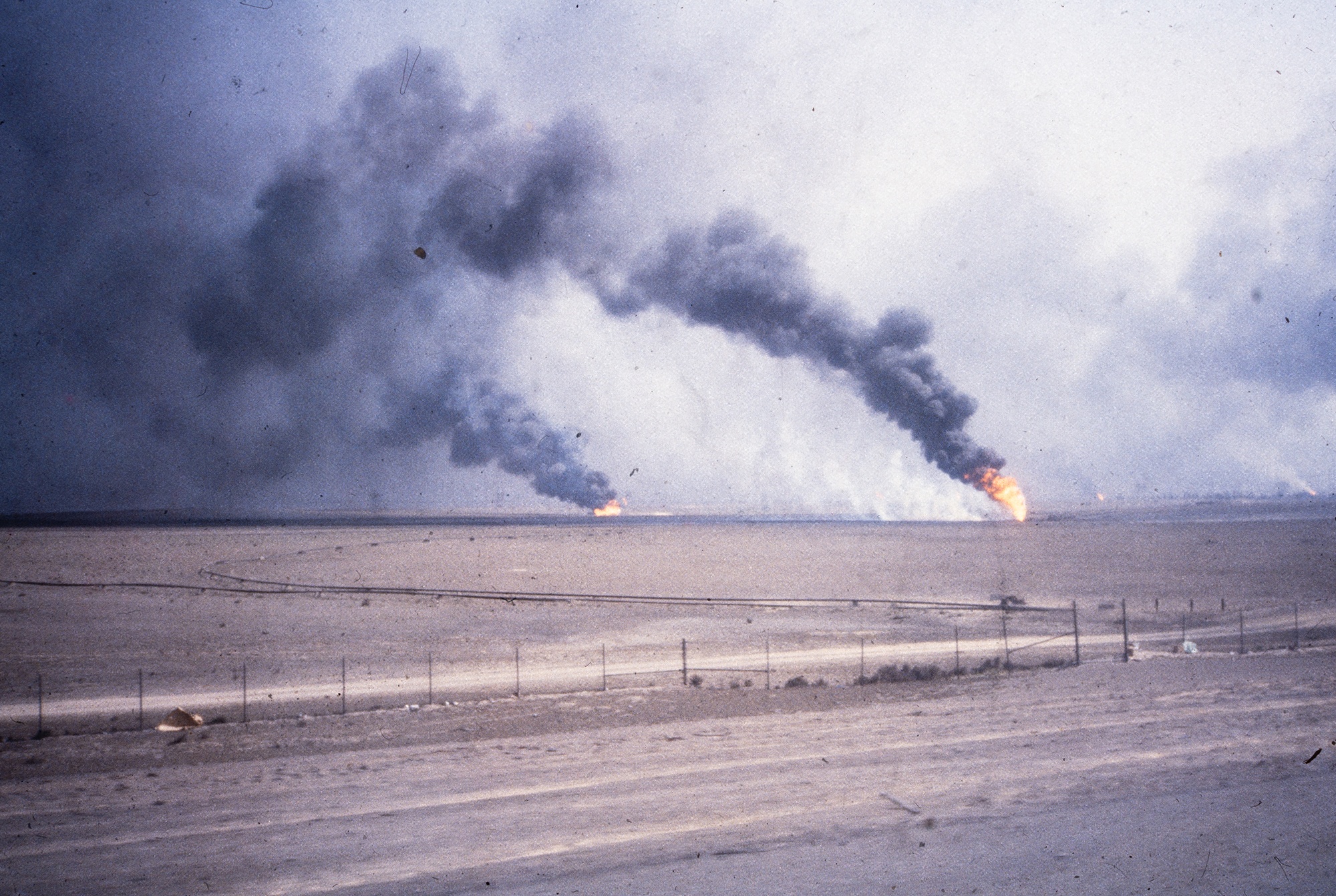
The sky was densely overcast that day, which we assumed was due to a rare sandstorm. However, the air tasted oily, and later we were told that the gray mist, which seemed to lighten and then intensify every few miles, was caused by raging oil fires in Kuwait that had been spewing noxious clouds of smoke over several hundred square miles for months.
As we motored on, we felt as if we were descending through Dante’s Inferno, from one circle of hell to another. Ironically, the major semicircular thoroughfare around Kuwait City was known as the 7 Ring Highways.
From the highway, we saw all the signs one would expect in the aftermath of a war of the size and ferocity of Desert Storm. There were mangled, burnt-out tanks, trucks, and other vehicles. Downed power lines, abandoned bunkers, vacant gun emplacements (mostly around highway overpasses), battered and charred buildings, and a torrent of other flotsam of war rushed by our windows as we drove on.
Kuwait City was at once both magnificent and unsettling. There was extensive damage to formerly majestic municipal structures everywhere. A playground on the waterfront, which had been senselessly and systematically vandalized, was especially moving. Only the macabre remnants of a clown’s face adorning what was left of the playground’s fence remained, a sight that echoed hauntingly in our memory when later we were shown an album containing photos of similarly battered faces of victims of Iraq’s reign of terror. Over 1,000 had died at the hands of their Muslim brothers. Thousands more had fled the country to escape the carnage, leaving the streets and shops vacant at the time of our arrival.
Eventually, we found our way to the Ibn Sina Orthopedic Hospital, which was to be our home during our brief stay in Kuwait. We were met there by our host, Dr. Mohamed al Hamadi, the hospital’s assistant medical director. A gentle, soft-spoken man, who had remained at the hospital throughout the occupation while thousands of others, including the emir, had fled, he added a personal touch to Iraq’s atrocities by recounting his own ordeal in general terms and sharing with us an album with photographs of tortured citizens and ruined buildings. He told us about the rape of Kuwaiti women and the systematic destruction of public utilities, libraries, private homes, state buildings, and the emir’s palaces. He described the devastation meted out on the telecommunication system, water purification system, and other infrastructure.
Thursday, May 23
The day began in a meeting with Kuwait’s assistant secretary of health, who hinted that Maryland was to be a partner in his country’s rebuilding effort, including a potential role in helping Kuwait develop its own shock trauma unit.
Later, we visited what was left of Kuwait’s Transplant Hospital. The facility was impressive — spacious, beautifully designed and equipped with the most modern and expensive equipment available. The Iraqis had appropriated the hospital and used it as a command center and detention facility. Toward the end of the war, they began a methodical and brutal dismantling of the facility. Their effort was awesome in its completeness. What could not be stolen was destroyed. What could not be destroyed was scattered.
That evening, we were invited to the annual residents’ party at Kuwait’s Cancer Hospital. There was much frivolity, music, and an excellent buffet.
Friday, May 24
This day was devoted to two trips — one to the “Highway of Death” and the other to the blazing oil fields. The former took us north in the direction of the border with Iraq. As we passed along what was the main highway between Kuwait City and Iraq, we saw remnants of the fateful and catastrophic Iraqi retreat from the city they had pillaged with such brutality: a burned-out tank here and another there, and another and another; an empty bunker here; an abandoned machine gun emplacement there; disabled trucks; broken, barricaded, and scorched buildings; downed power lines; over-painted road signs; and all manner of the detritus of war. Together, these sights formed a kaleidoscope of horror that could not be brought into focus until we reached the “Highway of Death” itself.
This came to us first more as a vague presence than a distinct vision. After traveling for about 40 minutes, we noticed a prominent hill some distance ahead, which from afar looked much like one of the decaying and cluttered cross-town highways so prominent in the northeast United States. However, as we approached the incline of that long-to-be-remembered hill, its actual character screamed out. As far ahead as the eye could see, the penumbra of that deadly highway was littered with disabled trucks, tanks, cars, and armored personnel carriers, along with assorted military clutter and live artillery shells. The overall effect on our party was stupefying. Although the roads themselves (dual three-lane highways) were clear, it was easy to imagine the congestion, terror, carnage, and chaos that reigned the day of Iraq’s terrible retreat. Its effect on us was intensified by the arrival of two F16s that screamed overhead.
The magnitude of Iraq’s disaster defied comprehension, even in the presence of such visual testimony only a few short months after the catastrophe. During the retreat, vehicles clogged both lanes while desperately trying to make their way north. When disabled vehicles made the roads impassable, those behind began to move laterally into the desert sand in a futile attempt to continue their hopeless flight. Amid the confusion and terror, the entire valley filled with ruined vehicles as the bleeding and demoralized army continued its struggle northward on foot.
From the “Highway of Death,” we headed south and west to the Kuwait oil fields. The flaming oil wells we saw there, in concert with the pictures of tortured Kuwaitis in Dr. al Hamadi’s album and the senseless destruction of property and public utilities, all tended to legitimize for us the slaughter of Iraqi soldiers that had taken place in the “Highway of Death.” At the time of our visit to the oil field, more than 500 wells were ablaze, set fire by the Iraqi military as a parting shot to Kuwait during its retreat. Through the smoke that billowed upward from the burning wells we could see, though barely, 100-foot flames knifing into the sky, 20 or so of them. Many more were lost in the smoke that seemed to extend forever. Before we arrived, five unsuspecting reporters, thinking they were on the highway, drove into a flaming oil well obscured by the smoke and were incinerated.
Why Iraq committed these atrocities is hard to understand. The Kuwaitis posed no real threat to them militarily or economically. In fact, Kuwait had assisted Iraq with money and supplies throughout eight years of its war with Iran. Why did Iraq mete out such harsh and senseless punishment on its tiny neighbor and Muslim brother?
The Kuwaitis we talked to had not the slightest notion. They did know, however, that for them, Arab unity was dead forever. Never again would they rally to the call of an Arab Jihad. They and their country had been abused beyond reason or comprehension. The psychological scars inflicted by Iraq would be long-lasting, if not permanent.
After the oil fields, we wandered aimlessly back to Kuwait City. We saw the main communications tower, which had been all but obliterated by Iraqi plastic explosives. We saw a seaside luxury hotel that had met the same fate. The beach in front lay cluttered with trenches, barbed wire, and obstacles erected against an amphibious invasion that never came. We saw one of the emir’s many palaces next door, pillaged. We saw one fortified villa after another, poised anxiously on the seashore in frustrated anticipation of a coalition push from the sea. We saw more beachfront fortifications, debris, and municipal disrepair.
Saturday, May 25
We learned that we were to be flown home on the Concorde. There would be 36 of us on the return flight, rather than the original 38. Two of our intensive care nurses were flying directly to Baltimore-Washington International Airport with an American oilfield worker who received third-degree burns on his arms and legs when a well he was working on suddenly reignited. He was to be flown to Baltimore on a Bechtel company jet for admission to the Francis Scott Key Burn Unit.
Three of us spent part of the day discussing opportunities for Kuwaiti trainees to participate in postgraduate training at the University of Maryland, hoping to provide the Kuwaitis with some tangible benefit from our mission. In truth, we had done little for the battered country during our visit. Although the Kuwaitis with whom we interacted seemed touched by our humanitarian gesture, in the end, we were more of an imposition than a help.
Sunday, May 26
Our last day. After a brief farewell ceremony and lunch attended by Dr. al Hamadi and the undersecretary of health, we boarded buses for our return trip to Dhahran and then a flight to London. From there, we flew via the Concorde to Dulles International Airport in Northern Virginia, arriving an hour before we left.
Two Weeks Later
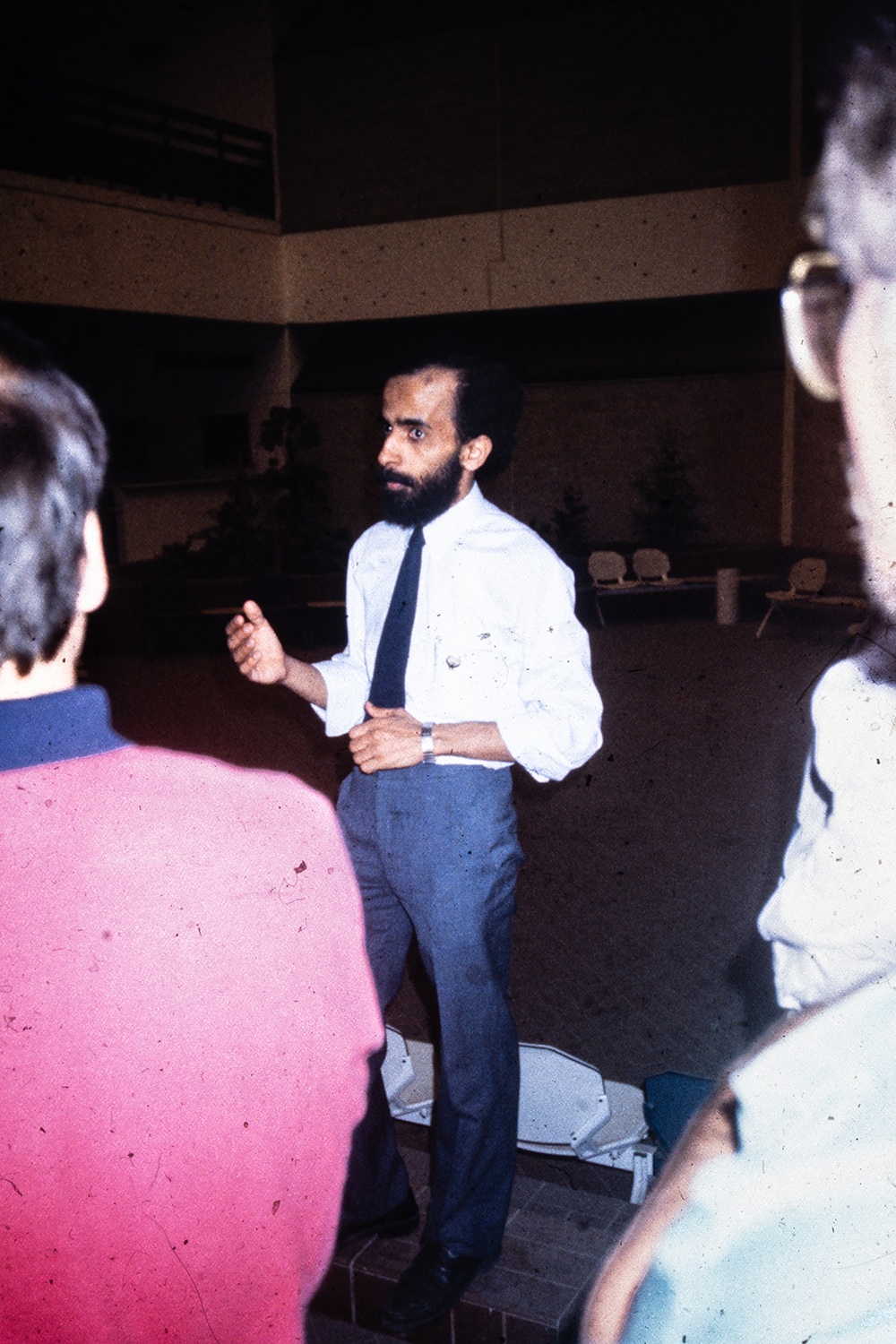
Two weeks after our return, many of us attended a debriefing meeting hosted by Lou Grasmick, a Maryland lumber magnate, on the governor’s behalf. Dr. al Hamadi traveled from Kuwait to attend. Grasmick informed Dr. al Hamadi that although the governor’s hope had been that Maryland businesses would have a prominent role in the rebuilding of Kuwait City, not a single contract involved in the initiative had been awarded to Maryland companies. No condolences were offered to Dr. al Hamadi for the horrors he and his country had just suffered at the hands of the Iraqis.