

 Giordana Segneri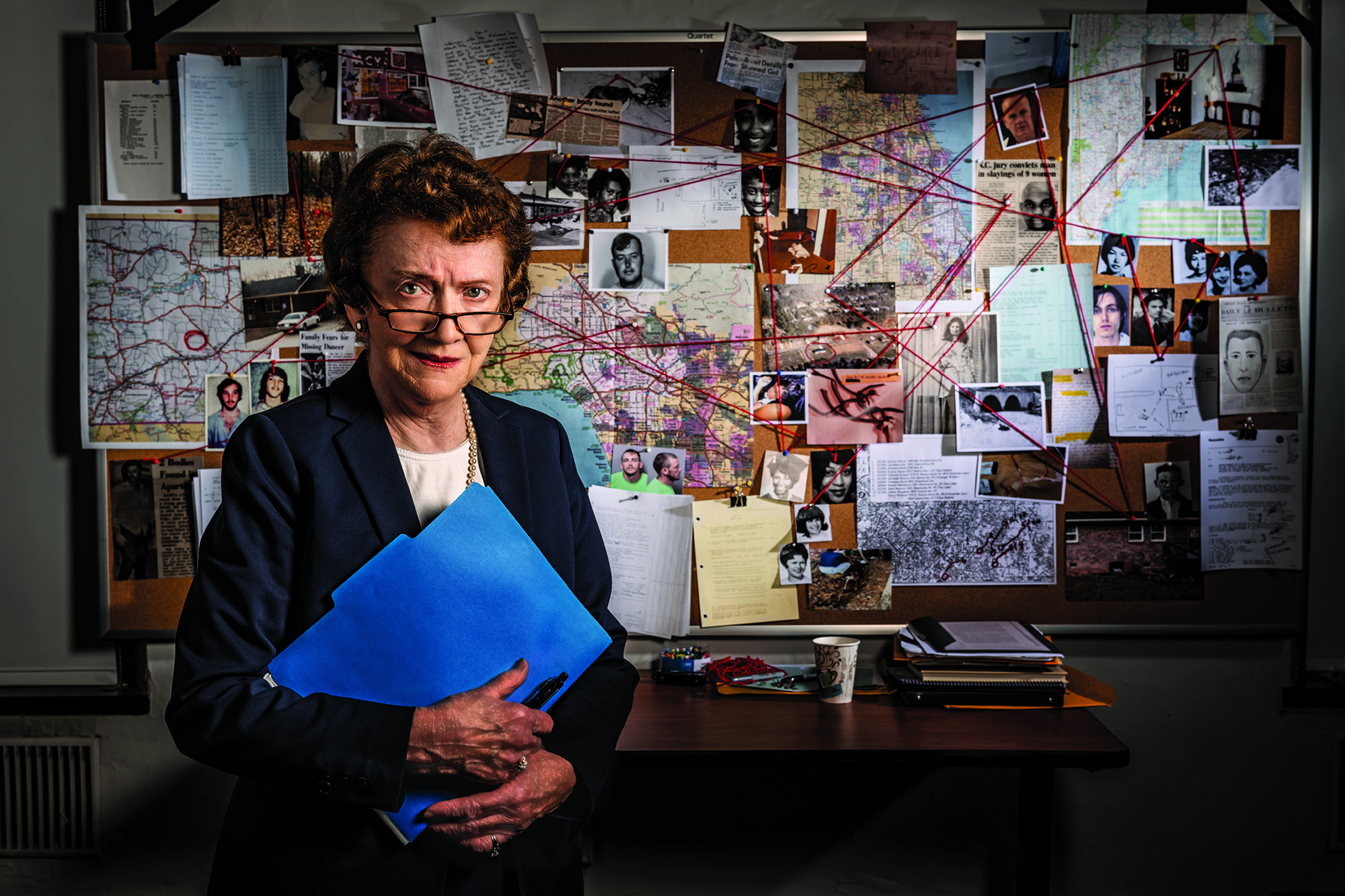
Never underestimate the influence of a teacher. When Ann Wolbert Burgess, DNSc, MS ’59, RNCS, FAAN, an internationally renowned expert in forensic and psychiatric nursing and a pioneer in crisis and trauma treatment, was an undergraduate nursing student at Boston University in the early 1950s, a psychiatric nursing instructor told her she thought Burgess would be “good in psych. She just said, ‘Do it.’ So, I did,” Burgess says.
Neither could possibly have known at the time where that suggestion would take Burgess. Moving from Boston to Maryland with her husband, who was in the Air Force and stationed at Fort Meade, Burgess took advantage of a full scholarship to continue her psychiatric nursing education at the University of Maryland School of Nursing (UMSON), earning her master’s degree. She worked as a clinical instructor at the then-Spring Grove State Hospital in Catonsville, teaching psychiatric nursing to students in clinical rotations, focusing on critical patient interviewing skills.
Those skills would serve as the key to her groundbreaking, decades-long collaborations with the FBI’s Behavioral Science Unit as a methodologist, helping to identify, interview, and understand the motivations behind violent offenders and serial killers — work that was chronicled in the Netflix hit series “Mindhunter.”
“I was fascinated with it — that they could take these horrible crime scenes and make some sense out of it,” Burgess says. Of course, in the TV series, the character of Wendy Carr, based on Burgess, is a psychologist, not a nurse. “I was horrified!” Burgess says. “They had me as a psychologist, of all things! When I would go into court, they would say, ‘Oh, you’re just a nurse.’ It was a devaluing of my professional background.”
That background included being one of the first Doctor of Nursing Science graduates in the nation, pioneering work in assessing and treating trauma and rape victims, and co-founding one of the first hospital-based crisis counseling programs at Boston City Hospital with a colleague from Boston College. Burgess continues to teach there as a professor in the Connell School of Nursing and to practice privately and conduct research.
From Serial Killers to Mass Shooters
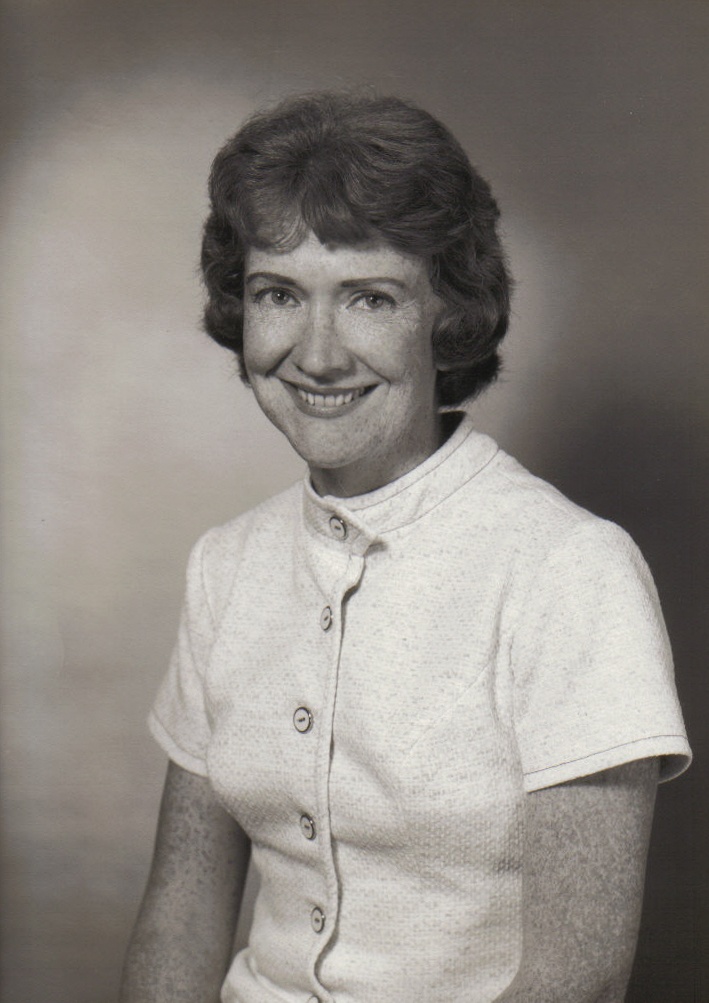
The focus of that research has changed over the years. “There aren’t as many serial killers,” she says. “And I think that’s because we’re getting them earlier. We have better techniques, evidence collection, DNA. And also, the people who are interested in committing violence have changed — instead of going after one person, they go after a mass shooting.”
That was the subject of the 2025 Ann Ottney Cain Lecture she presented at the 70th anniversary celebration of UMSON’s Doctor of Nursing Practice Psychiatric Mental Health program in November. Or rather, it was about her research into the detrimental effects of active shooter drills, particularly on the mental health of providers.
“We as nurses have a central role: We are front-line responders to balance patient protection with our own safety during crisis situations,” she said during the lecture. “We also have an ethical obligation to provide care during emergencies while trying to maximize personal safety and organizational support.”
An inappropriately conducted active shooter drill can have far-reaching, devastating mental health consequences on providers and patients, she explained in the lecture. “You have to have trauma-informed preparedness and integrate psychological safety principles into any emergency planning and training,” she said.
Another evolution in Burgess’ work involves the use of artificial intelligence (AI) and prompt engineering to provide interpretations of data from various experts’ perspectives. “Then we compare our human being interpretation with the AI, and it’s fascinating,” Burgess says. “It’s very revealing because the machine does the work, but it’s just a tool. You have to add human interpretation.”
Importance of Graduate School
But what has stayed the same over the course of her career, Burgess says, is the importance of graduate education. “So much of my learning in graduate school was based on interactional theory, and that stays a part of you,” she said; this theory posits that individuals learn about society through interactions with other people, and that society is formed by individual interactions. “So, it’s really critical that people think about that when they’re selecting a graduate program, that you know what the ideology is, because that’s what’s going to shape a lot of their future thinking and practice.”
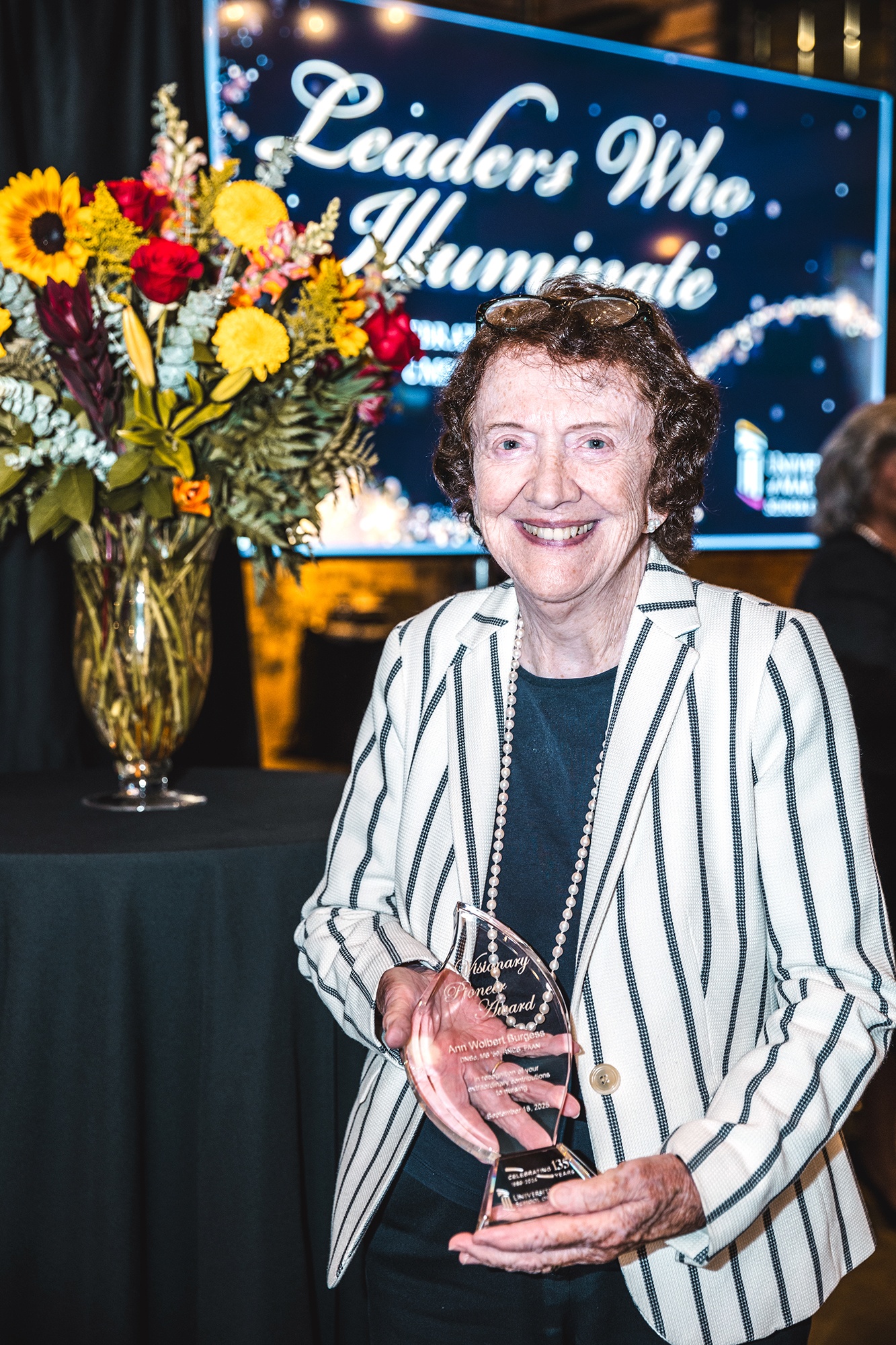
Burgess’ extensive body of work and scholarship in forensic science and psychology, victimology, and the treatment of trauma and abuse have led to numerous honors, including being named an American Academy of Nursing Living Legend, being inducted into the Sigma Nurse Researcher Hall of Fame, and receiving the American Nurses Association Hildegard Peplau Award. She was inducted as an UMSON Visionary Pioneer during the school’s 135th anniversary celebration last fall.
And still, the work persists. In addition to teaching, she continues to publish research findings — the subject matter of the Cain Lecture had just appeared in Nursing Outlook in late October. And earlier this year, she appeared on Brian Entin Investigates to give her insights on the disappearance of Nancy Guthrie, the mother of NBC Today show anchor Savannah Guthrie.