
 UMB Staff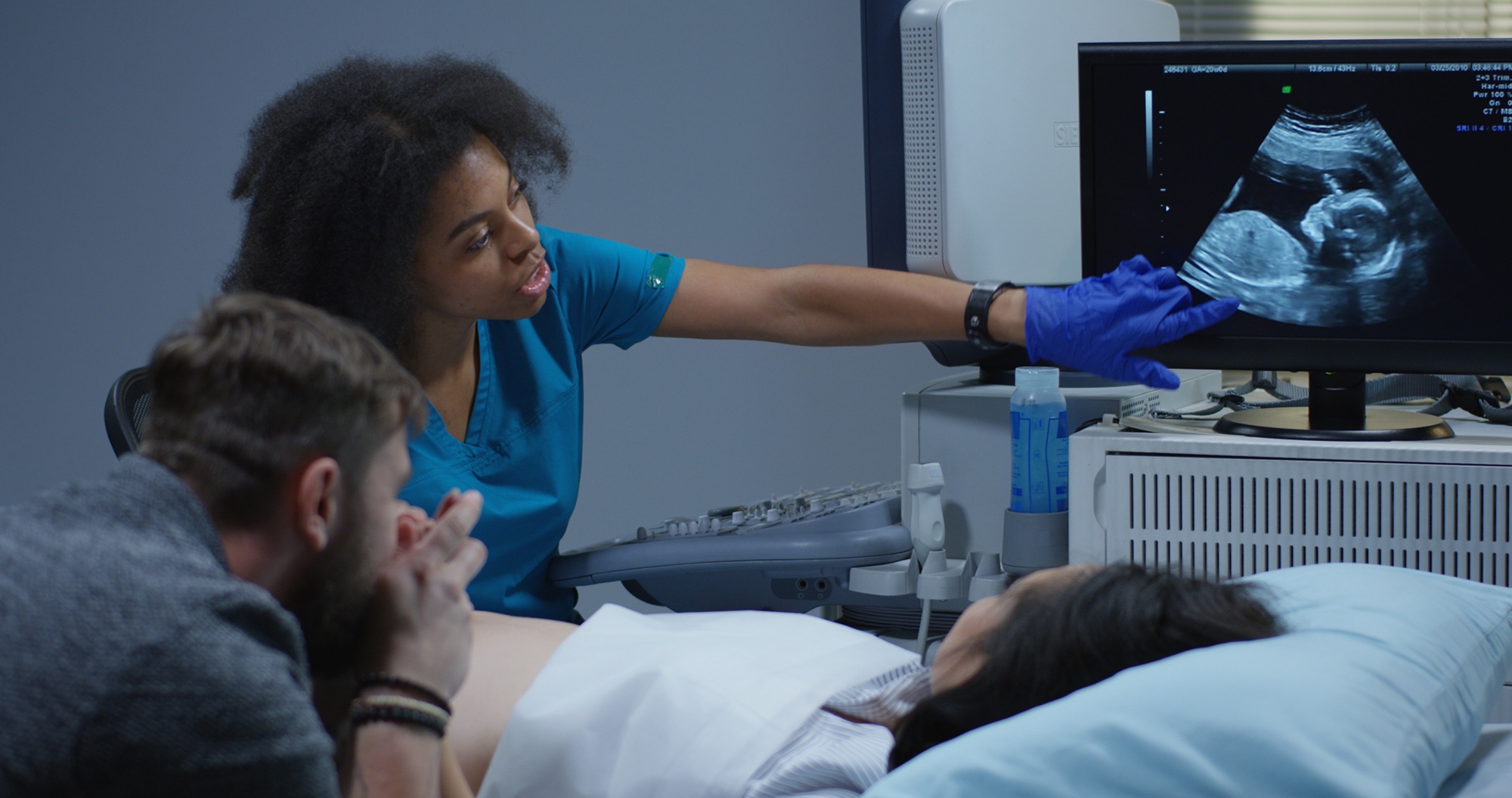
At the University of Maryland, Baltimore (UMB), groundbreaking discoveries happen every day — transforming medicine, improving health, and shaping the future. From changing legal policy to pioneering treatments to cutting-edge scientific breakthroughs, UMB researchers are tackling real-world challenges and making a lasting impact on lives everywhere. Dive into inspiring stories of innovation from across UMB’s seven schools to learn why Breakthroughs Can’t Wait. See how scientists, doctors, and experts are addressing today’s most pressing issues — fueled by the critical support of government funding that drives progress forward.
The following are just a small sample of UMB’s student researchers and scholars who are having an impact that changes lives.
What If We Could Identify Congenital Heart Disease in Every Baby Before Birth?
University of Maryland School of Medicine student Claire Wegner is investigating how congenital heart disease is diagnosed — and how earlier detection could save newborn lives.
As a participant in the Program for Research Initiated by Students and Mentors (PRISM), Wegner spent last summer in the Department of Pediatric Cardiology under the mentorship of Alicia Heather Chaves, MD, MAS, where she analyzed data from mothers and infants affected by congenital heart disease.
Early diagnosis is critical, Wegner stressed, saying, “It has been shown that infants who are diagnosed prenatally have much better outcomes than those who are diagnosed postnatally.”
That prenatal diagnosis, she continued, allows expectant mothers and their care teams to plan deliveries at hospitals equipped to provide specialized treatment, ensuring that newborns receive critical care without delay.
Wegner’s research found that mothers of Latino or Hispanic ethnicity, as well as those who prefer a non-English language, are significantly less likely to receive a prenatal diagnosis. Understanding why, she says, is key to addressing preventable gaps in care.
“These findings are going to help remove barriers to prenatal care and hopefully improve access to care for underserved populations,” she said.
Can Exercise Help Breast Cancer Patients During Chemotherapy?
As part of the Nathan Schnaper Intern Program in Translational Cancer Research at UMB, Benick Mbaya studied how exercise can improve symptoms for women undergoing chemotherapy for breast cancer.
“Chemotherapy-induced peripheral neuropathy is tingling in your hands and feet, and what we want to see is how that is changing across chemotherapy,” Mbaya said. “We want to look at the effects of exercise on physical function in women undergoing chemotherapy who have breast cancer.”
“The exercises we provide each of our patients are very simple resistance band exercises, which they can complete in the comfort of their own home,” he said. “They also have Fitbit monitoring so we can track their steps and have daily diaries where they can record their progress.”
Participants consistently shared positive feedback about their experience. Many said they would gladly take part in the study again or recommend it to others undergoing chemotherapy.
“When you think about the overall cost of cancer care, it’s over $100,000 per person,” Mbaya said. “If we can have a method that can improve symptoms and is easy to implement and cheap to teach, I believe that is overall good for the field of cancer care.”
Can a Proven Cancer Drug Be Reimagined to Fight Brain Tumors in Kids?
As an ACS-IMPACT research scholar at UMB, Gabrielle Olibris spent last summer in the lab of Aditi Banerjee, PhD, targeting medulloblastoma, a pediatric brain cancer, with a novel therapeutic compound called BNPP-433.3 Beta.
“We were trying to determine the efficacy of the compound in treating medulloblastoma — so killing off the medulloblastoma cells in our specific cell line, which was DAOY,” Olibris said. Because the brain is difficult to treat safely, especially in children, the team aimed to identify a compound that could be effective and less toxic.
“The brain is the information center of the rest of the body, so it’s harder to target cancer within the brain,” Olibris said. She added that treating pediatric cancers presents an even greater challenge because therapies that work for adults can cause more severe side effects in children. BNPP-433.3 Beta shows strong potential, she said, explaining, “This is already patented, so it’s a drug that’s already being used to treat prostate cancer.”
Olibris’ motivation for pursuing cancer research is personal. “When I was in the sixth grade, my dad had prostate cancer,” she said. “I’ve always known I wanted to be a doctor and work in pediatrics. I love my own pediatrician, and I really enjoyed working with children.”
By exploring a new use for an existing cancer drug, Olibris hopes to help advance research that could lead to safer, more effective treatments for children.