
 Laura Lee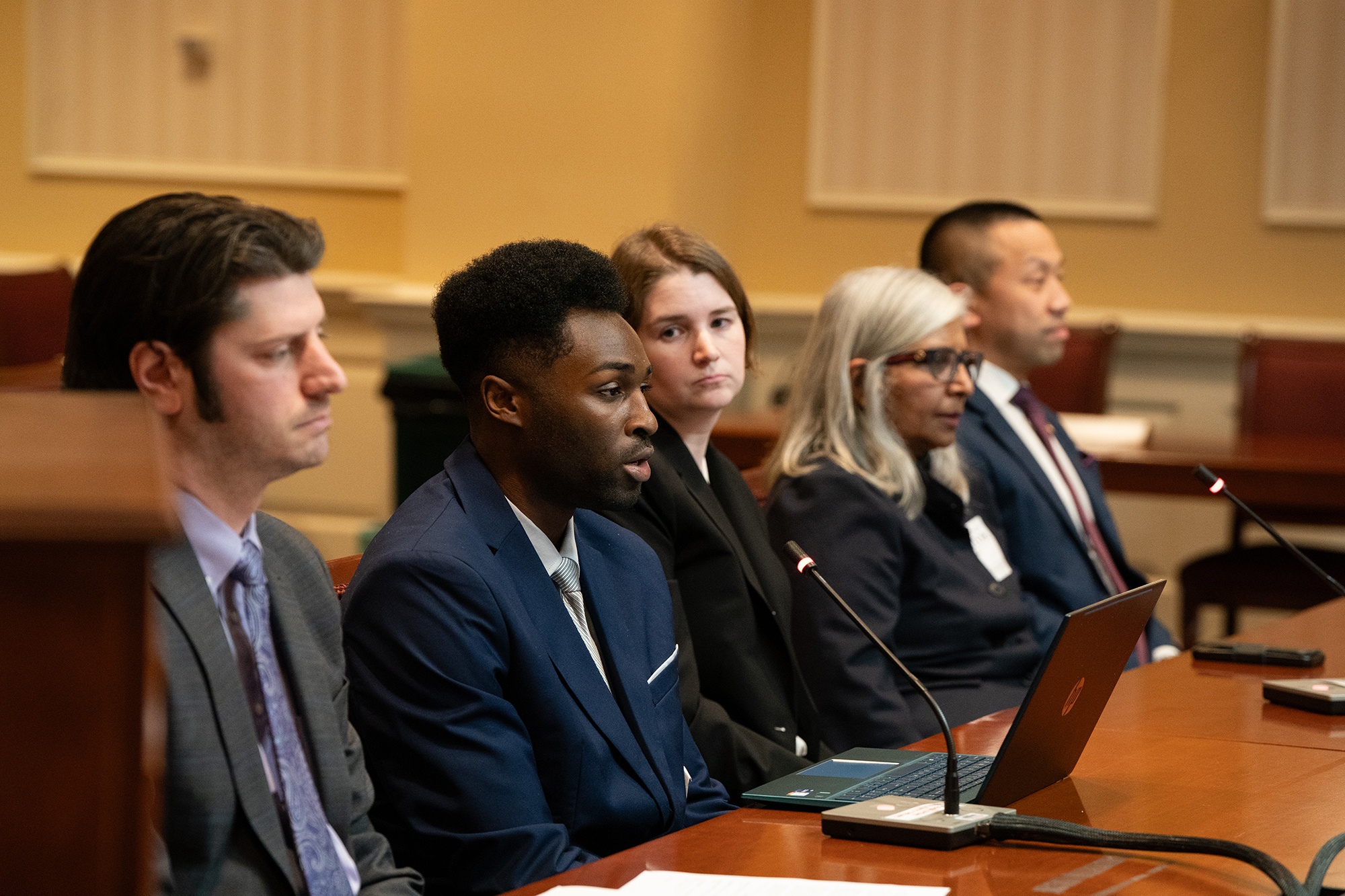
When Christopher Daffin, JD, enrolled at the University of Maryland Francis King Carey School of Law, he thought he was leaving medicine behind. As a biology major in college, he had planned to become a doctor. Then in 2020, the summer before his senior year, the murder of George Floyd shifted his trajectory and he decided he could make a greater impact as a lawyer, advocating for legislation that would improve people’s lives.
Today, Daffin, who graduated in 2024, calls his position as committee counsel for the Maryland House Health Committee his dream job. He manages a portfolio of bills covering public health, minority health disparities, and Medicaid, advising the committee chair and shepherding legislation from drafting through passage.
“It was really a full-circle moment,” Daffin said. “I thought I was leaving health and medicine, and then I ended up doing what I love in that same field I was already trained in through college.”
Daffin’s path from law student to legislative counsel was directly influenced by the Law and Health Care Program at Maryland Carey Law. Founded in 1984 by Professor Emeritus Karen Rothenberg, JD, MPA, the program was pioneering from the start, establishing the country’s first law school AIDS clinic. Consistently ranked in the top 10 health law programs in the nation, it has grown into one of the most comprehensive health law programs in the country.
The program offers more than 25 health law courses, covering everything from medical malpractice and food and drug law to bioethics, health care fraud, and the emerging legal challenges of artificial intelligence in health care. Students can gain hands-on experience through a number of clinics, including the Public Health Law Clinic, the Medical-Legal Partnership, and the new LGBTQI Equality Clinic, or through more than 30 externship placements at hospitals, federal and state agencies, and nonprofit organizations. The program also supports the student-led Journal of Health Care Law & Policy, works closely with the robust Student Health Law Organization, and sends student teams across the country to compete in health law competitions, including in its own Health Law Regulatory and Compliance Competition.
Students also can earn a Health Law Certificate, a formal designation approved by the Maryland Higher Education Commission that signals specialized expertise to future employers. About 750 graduates have earned this distinction in nearly 30 years.
Diane Hoffmann, JD, MS, who joined the faculty in 1987 and took over as program director in 2000, said the program’s national standing reflects decades of institutional investment.
“We just have so many resources devoted to it, and part of that is because it has such a rich history,” Hoffmann said. “We are on a health sciences campus. We have about 10 full-time faculty members and at least that many adjuncts who teach in this area, and they’re always writing about new and cutting-edge issues. Our clinical component has historically been strong, and our externship program, because we’re so close to so many hospitals as well as state and federal agencies, provides lots of opportunities for students.”
That proximity, she said, is central to how students learn to apply what they are taught.
“We’re close to the federal government agencies that address health care, but we also have Schools of Medicine, Pharmacy, Nursing, Dentistry, and Social Work right here,” Hoffmann said. “That gives students the opportunity to take interdisciplinary classes and learn about health law through the lens of students in the health care disciplines.”
Hoffmann said the breadth of the curriculum, combined with the program’s network of practitioners and experiential opportunities, is a major draw for prospective students and the reason graduates land in such a wide range of health law careers.
Externships Across the Health Law Landscape
Melanie Dang, JD ’14, was drawn to the health care law program by a combination of its reputation, curriculum, and location. An internship in a hospital compliance department during college had introduced her to the world of regulatory health care, and when she started looking at law schools, Maryland Carey Law stood out.
“I knew that Maryland had one of the few health law programs at the time. It was also ranked highly and had location going for it,” Dang said. “Maryland is a great health care state. There’s a lot of federal agencies, there’s proximity to D.C., and there’s a lot of law firms that focus on health care.”
Once she arrived, Dang took full advantage of the program’s externship network. Led by the Law and Health Care Program’s managing director, Rebecca Hall, JD, the externship program places students for academic credit at hospitals, federal and state agencies, and advocacy organizations under the supervision of a practicing health law attorney. Hoffmann noted that recent placements have included the Food and Drug Administration, the Centers for Medicare & Medicaid Services (CMS), the National Institutes of Health, the Maryland Office of the Attorney General, Johns Hopkins Health System (JHHS), and the U.S. Department of Justice.
Dang, who earned the Health Law Certificate, ticked off the externships and internships she had while in law school: CareFirst BlueCross BlueShield, the U.S. Department of Health and Human Services (HHS) Office of General Counsel, the HHS Office of Inspector General, the University of Maryland Medical System, CMS, and the Maryland Attorney General’s Medicaid Fraud Control Unit.
“When I say that I leveraged the opportunities that the program directors worked so hard for, I really tried to do everything,” Dang said.
Those experiences shaped her legal career. Dang is now deputy director of the Division of Alternative Payment Model Infrastructure at CMS’ Center for Medicare and Medicaid Innovation, where she supervises two teams, one focused on implementing value-based care policy and another staffed by lawyers who advise on center-wide political and policy issues.
Health law “is such a wide-ranging area of law that I think anyone could find something to be passionate about and pursue,” Dang said.
Hailey Genaw, JD ’24, who also completed the Health Law Certificate, took a similar approach a decade later. Now an associate at Epstein Becker Green, a firm known for its large health care and life sciences practice, Genaw works on regulatory matters including fraud and abuse, privacy, antitrust, and clinical research issues involving academic medical centers.
“I came to Maryland knowing I was going to do health care,” Genaw said. “I grew up around the health care space. Nearly everyone in my family is a nurse.”
Genaw split her first-year summer between the Pharmaceutical Research and Manufacturers of America and JHHS, giving her both the manufacturer’s and the provider’s perspective on health care law. She later externed at the Federal Trade Commission’s Mergers IV division, where she reviewed hospital mergers and competed in three health law competitions, including the National Health Law Transactional Competition at Loyola University Chicago.
“The competitions pressure-test you, and you get instant feedback,” Genaw said. “These are often issues that come up now in my practice. Having to think about that very early on, when you’re still in law school, was a beneficial experience.”
Clinics Bring Students into Real Practice
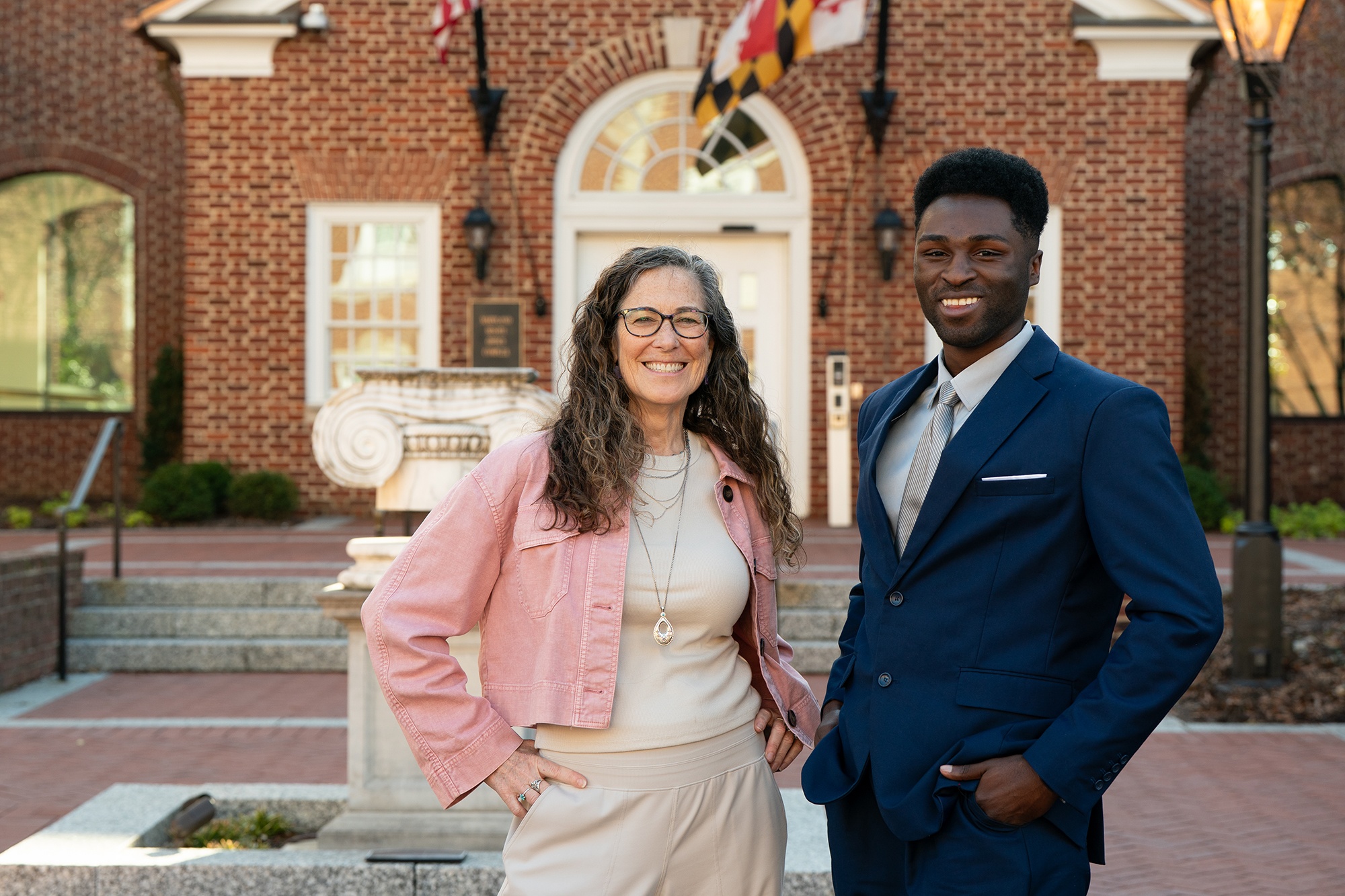
The Public Health Law Clinic, directed by Kathleen Hoke, JD, sends 10 students each spring to track legislation, testify before committees in Annapolis, and develop policy briefs for national organizations. This semester, students have testified on bills related to tobacco cessation, cannabis regulation, and reproductive health.
Hoke said the experience transforms students. “As terrified as they are, they love it and want to do it again after they finish,” she said. “It amplifies our campus’ presence in Annapolis. I’m only one person, but when we have the students working on what we all on this campus think is important, it makes a difference.”
Davon Nixon, third-year law student, recently testified before a Senate committee on a tobacco cessation bill. He spent weeks researching federal and state Medicaid requirements and practicing his testimony with classmates in the Public Health Law Clinic.
“That experience of advocating for something from the framing of a lawyer was interesting,” Nixon said. “It’s really a once-in-a-lifetime experience.”
In the Medical-Legal Partnership Clinic, directed by Sara Gold, JD, students provide direct legal representation to patients living with HIV who are referred through the University of Maryland Medical Center Midtown Campus’ THRIVE Program. Students handle cases involving Social Security appeals, housing conditions, custody disputes, advanced directives, and legal name changes.
“The idea behind medical-legal partnerships is that it takes more than just good medicine for people to have positive health outcomes,” Gold said. “Legal stressors cause anxiety, high blood pressure. They knock people off their medication adherence.”
Gold’s clinic also emphasizes interprofessional collaboration, pairing law students with social work students and connecting them with medical providers. In joint classroom sessions with palliative care nurses, social workers, and medical students, the future lawyers are taught to think beyond legal solutions and about the total wellness of their clients.
Allison Gumienny, a third-year student, spent the year in the clinic working on a complex divorce and custody case for a client living with HIV, building a close relationship with her client over weekly conversations. She said the experience was the most fulfilling thing she has done in law school.
“You take an exam, you get a good grade, that’s great, but it’s not quite as meaningful as when you have a good outcome for your client,” Gumienny said.
Meaningful Work
Back in Annapolis, Daffin is putting his training to work every day. In the 2026 session, he helped guide HB1485, also known as Tiara’s Law, through the House of Delegates. The bill provides resources for families who have lost loved ones to overdoses. He drafted it, managed it through committee, and helped legislators explain it on the floor.
For Daffin, Hoke’s clinic was his first real experience with health policy. In his final semester at Maryland Carey Law, he testified in support of adding vaping to the Clean Indoor Air Act and gained hands-on experience that prepared him when a position opened on the House Health Committee.
“My priority is to make sure the best policies for the health and well-being of Marylanders are coming out of this committee,” Daffin said. “I take a lot of pride in making sure that what we put on paper can actually work in the real world.”
For Dang, who still refers to the program as “ours,” that sense of purpose never left. “I always want to give back because of how grateful I am,” she said. “It’s all because of the Health Law Program. The professors take the time to teach students not only the theory, but the practice as well.”